While working at my computer, I heard my officemate, Nadya, sigh. She had a stack of homework papers that she was in the midst of marking, counting points and recording. She told me that she was starting to feel burned out from all the paper work and wondered if I felt the same.
She showed me how she was evaluating her students’ homework. They had written 10 items, and next to each one, she had written points. For example, a 2/2 meant that the student did that item correctly, a ½ meant it wasn’t completely correct, and 0/2 meant it was completely incorrect.
That morning she was in the process of (1) totaling the points, (2) writing a score at the top, and (3) recording the scores in her grade book. She said that she didn’t have time to write anything more specifically about the reason for the points on the students’ papers.
I then showed her a set of papers that I had recently marked. I don’t write points next to each item, but instead, I marked each with green or blue. Then I explained that by doing that, I’m able to specifically reinforce what they did correctly or point out what was incorrect. At the same time, I don’t need to write and record points, which saves me a tremendous amount of time.
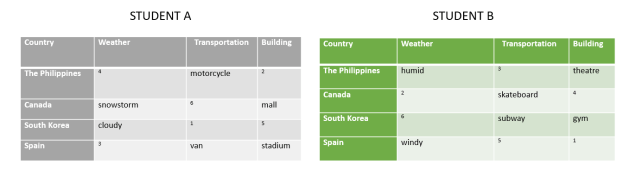
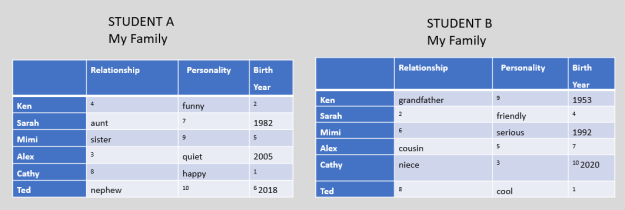
Here are samples of our different approaches to marking assignments:
Continue reading →