Category Archives: *ESL GRAMMAR

• Learning Grammar Inductively (No Teacher-Talk)

                        • Leading Student to Understand It
                                     He It is easy to do math.
                                    Was raining at noon.

Cover It is raining

(This posting includes a handout which you are welcome to use with your students.) *

Pointing to this sentence: “It started raining during the game,” Sylvia asked me what the word “it” was. “How can I know when to use it?”

I told her the grammar term for it (‘non-referential it’), but I didn’t tell her any rules. Instead, I led her to understanding it through a set of inductive exercises. This meant that she “formulated the rule” correctly on her own by working with examples.

Some typical problems students have with this are when they write sentences like these:
Was raining after work.
He is easy to do math.

Inductive exercises to lead students to understand non-referential “It” as the subject of a sentence.

(This post includes a short form of the exercises. On the handout in the link below, you can see more items for each exercise.) Notice: This does NOT involve any TEACHER TALKING.


Continue reading

• The Grammar Aspect with Most Mistakes by Language Learners: Prepositions (REVISITED)

*(This posting includes handouts which you are welcome to use with your students.)

I discuss this posting about prepositions in this short videoGrammar Aspect with Most Mistakes: Prepositions

According to Brain Briefs by Bob Duke and cognitive scientist Art Markman, “… adults who learn a new language make more mistakes with prepositions than with just about any other aspect of speech.”

Most ESL teachers have probably been asked questions like this one that I had from one of my students, Camila, from Mexico: “Why do we say ‘I’m confused about’ rather than ‘I’m confused at’?”

It seems futile to try to explain the reasons or give rules for when to use certain prepositions. And even if we could formulate some, it seems unimaginable that students will stop while speaking or writing and ask themselves, “Now what was the rule for the preposition here?” Just the preposition “on” has 10 definitions.

How to learn prepositions

Markman and Duke summarize what many professionals (e.g. Krashen) in the teaching ESL field  have said about how to learn prepositions: “… the best way … is to hear them, use them, and allow your brain to recognize which ones are appropriate in different circumstances by taking into account both the meaning and the statistics of when they are used.  This kind of implicit learning requires a lot of exposure to the language …” (p. 127).

This doesn’t mean that the only role that a teacher plays in this is to just provide meaningful input through reading and listening.

Three ways teachers can facilitate students’ learning of prepositions

Continue reading

• Semi-Colons Can Actually Be a Useful Tool for ESL Students

screenshot-1462

Hey, David. Did you notice the two semi-colons that I used in my essay?” Alvin asked me as he entered the classroom.

It’s easy to think that ESL students can live without semi-colons. However, after doing a brief lesson with them, I found that they not only can understand what they are, but also, how useful they can be.

As an introduction to semi-colons, I explain just three general points:

Continue reading

• Getting Backed Up with ESL Paperwork: Effective Solution

Cover shot

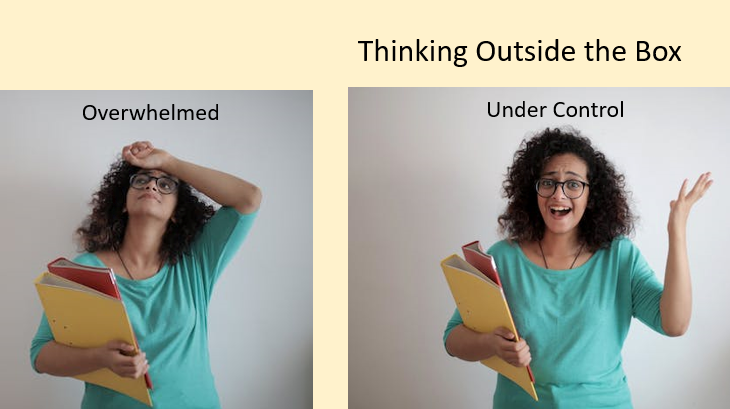
There seems to be certain times during a term when we can feel a bit overwhelmed by the amount of paperwork coming in. During those times, it makes sense to establish some priorities concerning how we approach “marking” the various assignments.

It’s sometimes tempting to rationalize not giving any feedback on or returning some homework assignments by thinking that there are intrinsic benefits for students to just do the exercises. We say to ourselves that it’s not absolutely vital that they get them back quickly (or even, in some cases, ever). Thus, we might consider doing a “triage” with assignments. Essays might get top priority for our time and attention with “lesser” assignments just filed away or held off until sometime in the future when we are all caught up.

Surprisingly, this feeling of being overwhelmed can actually open up a motivation to respond to homework assignments in a way that is more effective than how we would “normally” do it when we have plenty of time.

Continue reading