
Earlier in my career, I was assigned a pronunciation course with 12 students representing five distinct language groups: Arabic, French, Japanese, Spanish, and Vietnamese. The program administrator had provided a standard pronunciation textbook, and my first challenge was deciding where to begin.
The textbook followed a traditional linear path, starting with 75 pages (nearly 30% of the book) dedicated to vowel sounds—beginning with the high-front vowels in words like eat versus it. However, before allowing the syllabus to be dictated by the authors, I researched which sounds these specific 12 students actually needed to master to avoid communication breakdown. This is what I found:
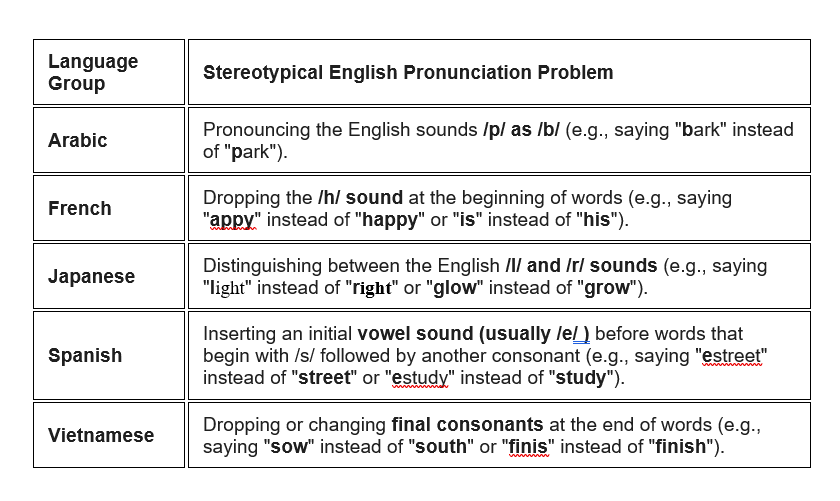
My findings were revealing: vowel production was rarely the primary cause of unintelligibility for this group. I then considered shifting the focus to consonants, but faced a pedagogical dilemma: if I spent class time on the /p/ and /b/ distinction to assist my Arabic speakers, I would be wasting the time of the other nine students who had already mastered those sounds.
Is Pronunciation the Real Culprit?
Throughout my years teaching ESL globally, whenever the topic of adding a pronunciation course arises, I ask colleagues: “How often do you actually experience a total breakdown in communication with higher-level students due to their accent?” The consensus is consistent: rarely. Usually, only one or two students per term present such challenges. This suggests that most pronunciation hurdles resolve naturally through communicative interaction in conversation classes and increased engagement with English speakers.
To test this further, I conducted a 10-year study across three colleges, interviewing 45 mainstream (non-ESL) instructors across 14 disciplines. I asked about their experiences with former ESL students and where communication typically failed. Not a single instructor cited pronunciation as the primary cause of breakdown. Instead, they pointed to gaps in vocabulary and grammar. This evidence suggests that our resources might be better spent on intensive reading and listening courses—increasing input rather than drilling isolated sounds. (For more about these interviews, see • Most Important Process that You can do for Yourself, Your Students, Your Program (Part 1) and Professors Expecations of Foreign Students in Freshman-Level Courses pp 108-117)
Alternative to pronunciation class
As I mentioned above, I have had the occasional student who at times was difficult to understand. We needed to help these students without taking up valuable program resources in a pronunciation class with questionable value. It became obvious that the best way to truly help those students was to work with them individually. It was also clear that the process needed to be time-efficient yet effective. In the links below, I’ve described the processes that I’ve used and that tutors in my programs have used to effectively work with these students:
• Pronunciation practice: Easy and Effective One-on-One Technique
Most Confusing ESL Pronunciation Mistake (Includes Interactive Exercises)
For a video demonstrating this, see Most time effective approach to helping students improve their pronunciation (time efficient)
David Kehe
Faculty Emeritus

