In a study, researchers used a technique with half the participants but not with the other half (the control group). The results: the ones who experienced the technique made half as many mistakes on the task as the control group.
We teachers could apply a variation of this technique during our lesson-introductions as a way to motivate our students.
Here is how the study was carried out by a psychologist, Dan Ariely. The participants were asked to read words in a room with extremely bright lights. They were all give sunglasses, but half of them were told they were wearing expensive Ray-Ban sunglasses. The other half were told that theirs were just ordinary sunglasses. However, both groups were actually given the exact same type of sunglasses.
The researchers found that the participants who thought they were wearing the Ray-Ban sunglasses read twice as many words correctly as the “ordinary” sunglasses group. Also, they completed the task more quickly.
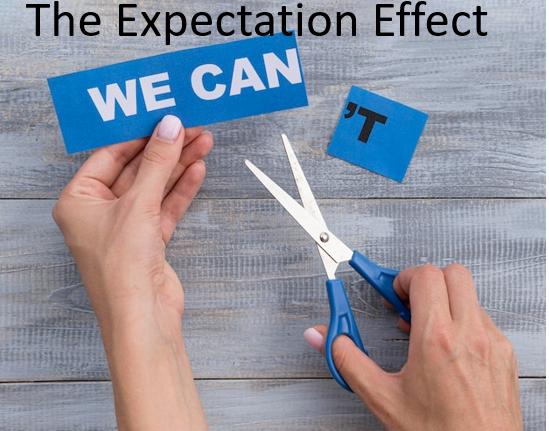
Scientists call this the expectation effect. People tend to perform better when they expect to do so.
In a similar study, half the participant were told that they were going to listen to a task through expensive headphones and half were told they had cheap ones. Actually, all the headphones were the same, but the expensive-headphone group performed much better at identifying distorted words than the cheap-headphone group.
Applying this technique to our classrooms
Needless to say, we don’t have to trick our students in order to trigger the expectation effect. If we truly believe that a lesson is going to help them improve their language skills, we can promote it during our introduction in a way that can make our lessons more effective and give students more confidence.
Templates for introduction that trigger the expectation effect
- “I often talk to my former students. Many of them told me an important lesson from this class that has helped them was …”
- “According to research, the most important technique for student writers is to …”
- “Next term, you will be in Level ___. The teachers at that level told me that the students who are most successful in that level are able to …”
- “We recently did some research. We looked at the paper students wrote in English comp and noticed something important about their papers. The papers of the ones who got an A or B had …”
Examples of introduction that trigger the expectation effect
Conversation Class: Using follow-up questions
Researchers studied conversations, and they found something amazing. People who ask follow-up questions during a conversation are more popular than people who don’t. Today, we’re going to practice this technique. (See • Conversation magic: Two most important techniques. (Part 2))
Writing Class: Writing a Definition Essay
Many of my former students have told me that type of essay was challenging for them but it was also the most creative and rewarding. Today, we’re going to begin study how to write a Definition Essay. You’ll be learning five special techniques. Many my former students have shown me essays that they wrote in English 101. And in so many of their papers, I noticed that they used some of these five techniques. (See • Most Stimulating and Engaging but Often Over-Looked Essay Mode )
Reading Class: Reading without a dictionary
At the end of this course last term, one of my students wrote me a note. He said that he needed to take a Psychology class for his major but was afraid of the reading. But he said that now, he has confidence in his reading ability because of this course. One of the skills students learn in this is how to understand reading passages without having to look up every word they don’t understand. (See • Three Ways to Use Authentic Materials In The ESL Classroom Depending On Purpose And Level.)
Writing Class: Using subordination
After you pass this course, you will be able to take English Composition or English 101. I often talk to the teachers in English Comp to learn more about what writing skills students like you will need to be successful in their classes. I found out that in one college, there is one most important feature that they look at to decide if a student is ready for English Comp. And today, we will work on that: It’s writing sentences using subordination. (See • Is the Hokey Pokey Really What It’s All About? No, Subordination Is. (Part 1) )
Conversation Class: Speaking with details
The other day after I had finished teaching all my classes, I was sitting in my office. And I was feeling kind of tired. Then a student came to ask a question. After I answered his question, I asked him how he was doing in his college classes. Interestingly, he didn’t just say “OK,” or “Not OK,” but instead he answered with some details. This led to an interesting conversation. After he left, I realized that I wasn’t feeling tired anymore. Today, we’ll practice the technique. (See • Conversation Activity: Getting Students to Say More Than the Minimum)
Also, see • Introducing any ESL Lesson: FIVE Effective Ways
David Kehe
Faculty Emeritus
 Common Sense Teaching ESL