(This posting includes a handout which you are welcome to use with your students.)
This posting is a more detailed response to my interview question on Day 1.LINCS Discussion: Student-Centered Approach to Teaching Writing Skills. .
Below in blue, you’ll find the details that I’ve added to the Day 1 LINCS’ posting.
The key to a productive process approach is to have a clear purpose for each of the drafts. Here is the process that I’ve found to be the most effective, time-efficient, and user-friendly for the students and teacher. And it involves only three drafts.
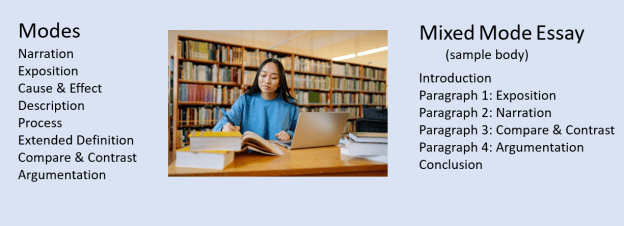
Before starting the writing process, the teacher briefly introduces the type of writing that the students will be working on, for example a mode like Narration or Exposition.
Step 1. Preparation for 1st draft. The teacher gives students a list of 5-15 topics to choose from. It works well to include topics that they’ll be able to think of details to write about and also ones that would be enjoyable for others to read. If a student has a topic not on the list that they’d like to write about, they first have to have it approved by the teacher. Each student chooses one of the topics.
I knew a teacher who was under the assumption that process approach meant students needed to find their own topics. I found out that many of those students spent a lot of time trying to come up with a topic or would write about topics that they had written about in the past. Also, some would decide on a topic only to discover that it wasn’t appropriate for that assignment.
After they have chosen a topic, they write a list of ideas. It’s important to be flexible about how many details to expect in this step. I know some native-speakers who are great writers but actually hate to write an outline in advance. They discover what they want to write as they are writing. However, I think that without us requiring a list, student will just start writing and miss the opportunity to see how helpful a list can be, especially considering that they may be working with a pattern of organization that is different from the ones in their own culture.
After they write their lists, the teacher briefly looks them over and, if necessary, makes some suggestions. This usually takes less than two minutes per student.