Category Archives: *MOTIVATING ESL STUDENTS AND TEACHERS

These posting include techniques for motivating ESL students and perspectives for motivating teachers.

• Discouraging Smartphones from Disrupting Students’ Focus in Class

smartphone

(This posting includes a handout which you are welcome to use with your students.)*

Research has found that students who multi-tasked with emails, text messages, and social media during class had lower scores on tests than students who did not multi-task.

I wanted to share that research with my Writing students, but, instead of just giving a lecture, I incorporated it in a fluency writing activity (I’ve described the step in a fluency writing activity in a previous posting Fluency writing: reading, speaking in triads, and listening culminating in a writing task. )  It involves reading, speaking, listening and writing.  In brief, students in groups of three, each having a different part of an article, read their part to their partners, and then, individually paraphrase the entire article.

I’m attaching the complete fluency activity about smartphones below in case you’d like to try it with your students.

Continue reading

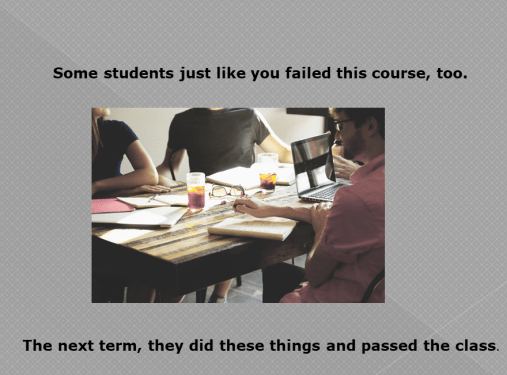
• Advice to a Student Who Needs to Repeat a Course (Using Peer Examples)

Advice to Ze failing course COVER shot

He was making bad decisions all term long, which resulted in failing the course.  In order for Edward to pass my advanced academic ESL course and move on to English Comp, he would need to repeat the course.  He would also need to change his habits such as coming late and forgetting assignments or doing them with little effort.

After he found out that he failed, I emailed him to let him know that I could give him advice about how he could pass next time.  To my surprise, he asked for it.

My first impulse was to make a list of all the things that he needed to change in his study habits.  Then I realized that there was a more positive approach that I could take to giving this advice.

I have found that students seem to be more affected by what other students do in a class than what an instructor tells them to do.

Continue reading

• Best Subject for an ESL Integrated-Skills Class (Part 2 of 4: Reading aspect)

Cover Part 2 Reading Shot

(This posting includes a handout which you are welcome to use with your students.)*

For an extended discussion of this topic with links to some YouTube videos and downloadable exercises, see Four Part Series: Why, How And When to Teach ESL Integrated- and Discrete-Skills Courses. 

Why do Asians often seem so shy in social situations compared to westerners?

To illustrate how the subject of cultural differences is the best subject, I’ll include a reading passage about this followed by discussion and writing activities related to this.

This “shyness” topic is an effective one for demonstrating the important aspects of this “best” subject:

Continue reading

• Integrated vs Discrete Skills ESL Courses: Advantages of Discrete Skills

Cover Advantage Descrete shot

For an extended discussion of this topic with links to some YouTube videos and downloadable exercises, see Four Part Series: Why, How And When to Teach ESL Integrated- and Discrete-Skills Courses. 

YouTube This posting is discussed on my YouTube video: YouTube about advantages of discrete-skills courses

After the first day at a college I had previously taught at, I noticed a long line of students outside our EAP (English for Academic Purposes) director’s office.  It was my first day teaching in this program, so, needless to say, I was curious.  It turns out these students all felt that they had not been placed in the right level.

I soon discovered that this was a common occurrence on the first day of each term in that program.

The courses in that EAP program were organized around integrated skills, so each student was placed into one of five levels for all five hours of instruction. 1 By the end of the first day, students were quick to notice that some of their classmates were weaker than they were in some skills (e.g. speaking) but higher in others (e.g. reading).  They also were aware that some of the activities during the course of the day, depending on the skill, were right at their level, but others were above or below.

It’s not too surprising that this would happen.  New students had been given a placement exam that tested multiple skills: reading, writing, speaking, listening and grammar.  The exam resulted in one score, and their level was determined by that one score.  That seemed to be the crux of the problem. 

Continue reading