Category Archives: • During Class

• Fun Activity To Reduce Irritating Classroom Behavior

(This posting includes a handout which you are welcome to use with your students.)

 (This is a revision to an earlier posting: Enjoyable and Effective Awareness Activity for Changing ESL Students Classroom Behavior)

Most ESL students don’t do goofy things just to irritate the teacher. Usually, they are unaware of how they are coming across or unaware that they are acting differently from the other students or even what is expected of them.  These are some of the habits students tend to bring to our classes:

  • Chronically arriving to class late
  • Chatting with classmate
  • Text messaging during class
  • Not paying attention
  • Not participating in a group
  • Calling out answer before others get a chance
  • Sitting in the back of the room day-dreaming
  • No eye contact to teacher or classmates in a group
  • Speaking own language in a group
  • And more

An effective approach to circumventing these habits is one in which students become aware of the effects these habits have on the teacher and other students. In this post, I’ll explain how programs that I’ve taught in were able to help students see how their behavior is viewed by others. Not only was the process enjoyable for the students, but also, we noticed far fewer students engaging in these behaviors.
Here is how we did it. 

Continue reading

• Don’t Wastes Students’ Energy Teaching Certain Types of Vocabulary Words in Reading Class (Revisited)

Three Tiers

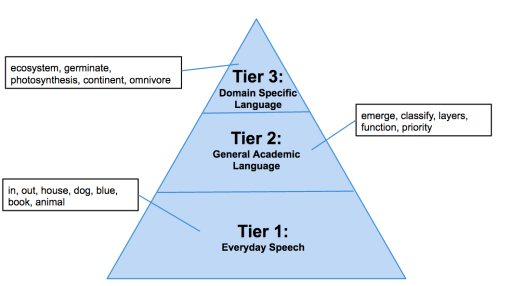
“Radiance,” “strike a deal,” “gorgeous” “ecosystem.” In my 40 years of teaching academic ESL, I’ve probably seen these word in a reading passage at most only once or twice.  And I’ve never seen a student use them in a writing task.  And yet, these words were  included in several vocabulary exercises in a textbook, and students were asked to write sentences with them.  Because the words were in a reading passage, the author of the textbook, for some reason, decided that these were important words for students to study and try to internalize.

I think most of us would agree that spending time on words so rarely used as “radiance” or “strike a deal” is probably not the best use of students’ precious time and mental energy if our true goal is to help them develop their reading skills.  At the same time, many of us who have studied a foreign language would agree that reading comprehension is enhanced by knowledge of a lot of vocabulary words.

At this point, two questions come to mind: (1) How do learners increase their vocabulary, and (2) which vocabulary words would perhaps be beneficial to study through exercises?

Continue reading

• Introverts Find Their Call Teaching ESL

I was ready to start class. Unlike previous days when I left my door open, I slowly closed it because I didn’t want any administrators walking down the halls to see what I was doing with my students. I was afraid that I might get fired.

Continue reading

• Most Important Tool for Managing Classroom Behavior (Case two and Caveat) REVISITED

Classroom management

“David, Please report to the Director’s office as soon as your class finishes.  He needs to talk to you.”  A program assistant handed me a note with those sentences on it.  Gulp!

In the early 1980s, my wife and I, without much thought, accepted teaching positions on the Greek island of Lesbos.  It was a Greek island, so what could possible go wrong?

It was a prep school that high school students attended in the late afternoons/evenings after high school to study English.  Shortly after arriving, we met one of the teachers whom we were replacing.  He told us that the school had a lot of discipline problems because many of the students didn’t want to be there.  He said that the teacher-turnover was quite high as a result.  In fact, a couple of teacher had just disappeared a few months earlier.

On the first day of class, as we walked down the hallway, we could see students literally chasing each other around the class rooms and jumping on the desks.  My first class was with 16 tenth-grade students.  Although most of the students paid little attention to me but instead continued to chat as I started the lesson, there were three female students sitting in the front row appearing eager to begin.  Those three became the focus of my attention.  Gradually, most of the others started to engage in the lesson, while a couple slept or doodled or looked out the window.

Continue reading