(This article was originally published in MET (Modern English Teaching) in Spring 1986.) MET website
It mat come as a surprise to any number of teachers to realize that most students do not view their ESL class as the number one preoccupation in their lives. Students come into the class with a myriad number of matters on their minds: weekend plans, family problems, the test in the next class. To foster a classroom atmosphere conducive to students’ leaving behind their outside world and to their focusing attention on the lesson at hand (not to speak of their becoming personally involved in the subject material!) can be an exacting task. Many of us as teachers have seen the otherwise well-planned lesson go “awry”, or just not fulfill our expectations. It may always remain open to speculation as to the reasons why, but most would probably agree that a thoughtfully-prepared lesson does indeed deserve a proper “entry”.
In order to help students to focus on a particular day’s material and to become personally involved in its content, I have found a “prediction process” useful as just such an “entry” into listening and speaking activities. In brief, in the “prediction procedure,” my students make predictions about the content of an upcoming activity and then share their predictions, first in small groups and then with the class as a whole. By so doing, students end up not only focusing on the topic of the material at hand, but also investing a part of themselves in it; they have a “stake” in what follows
Following are detailed examples of this procedure as it was used in four actual classroom settings. In this Part 1. the two examples portray the “prediction procedure” acting as an “entry” to listening activities.
In my next posting, Part 2, the two examples describe the procedure as it leads into discussion activities.
Continue reading →

 This posting is discussed on my YouTube video ESL Writing Class Activity: Fun, Lively and Productive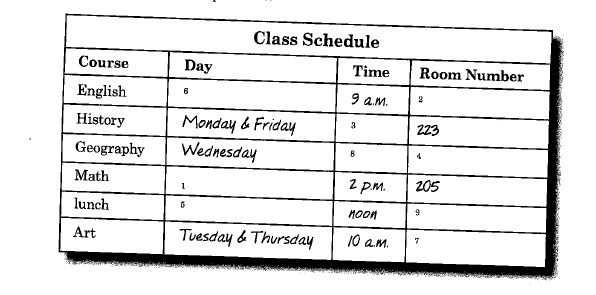

 Common Sense Teaching ESL