Category Archives: • Reading Units (Complete)

• 6th Free ESL Reading Unit. Click: The Power of Similarities (Names)

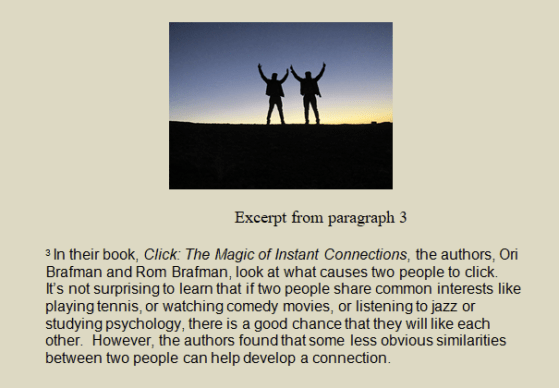
Click cover excerpt shot

*(This posting includes handouts which you are welcome to use with your students.)

See Select Category > ESL Reading Units Free: Reading for Insights (Introduction) for an introduction to these reading units. Reading Units: Reading for Insights (Introduction)

Article & Study Guide for Click: The Power of Similarities (Names)

Continue reading

• 5th Free ESL Reading Unit. Why It’s Hard to Ask People to Help You

*(This posting includes handouts which you are welcome to use with your students.)

See Select Category > ESL Reading Units Free: Reading for Insights (Introduction) for an introduction to these reading units.

Article & Study Guide for  Why It’s Hard to Ask People to Help You? 

Continue reading

• 4th Free ESL Reading Unit: Handwashing and Motivation (Surprising pre-coronavirus research)

Screenshot (467)

 (This posting includes handouts which you are welcome to use with your students.)*

YouTube  This posting is discussed on my YouTube video Handwashing and Motivation (Surprising pre-coronavirus research)

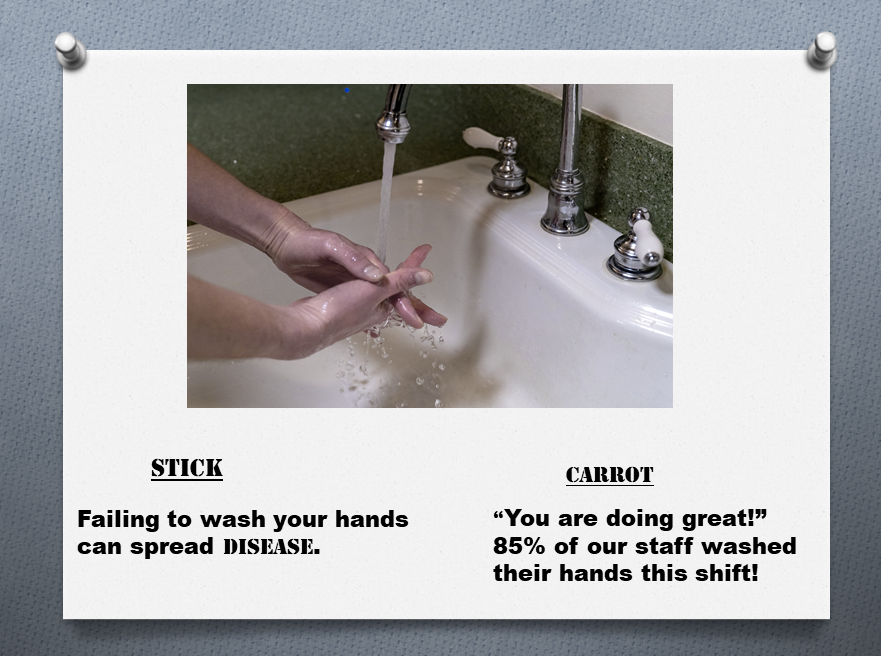
Several years ago, long before the coronavirus pandemic, researchers found that restaurant workers and hospital staff members were very negligent about washing their hands. This article discusses a clever study that was conducted to find a way to reverse this trend by comparing positive and negative messages.  The results from the study can give us some interesting insights into how we might best motivate people in general.

Excerpts from paragraphs 2 and 11

2 We expect doctors and nurses to be aware of how important it is to wash their hands after they have examined or helped a patient.  They understand that if they don’t, they could spread a disease from one patient to another.  Surprisingly though, a researcher found that only 39% of hospital workers washed their hands properly.  That is almost the same as the 38% of restaurant workers who do.

 11 In sum, the researchers found that using a positive approach with the electronic board was much more effective than the negative signs about spreading disease.  Every time the staff members washed their hands, they received immediate positive feedback.  This positive feedback triggered a pleasure signal in their brains which they enjoyed getting.  In other words, they tended to repeat this action in order to experience that pleasure signal.  After a while, it became a habit, and they continued to do it even after the electronic boards were removed.

Article & Study Guide for Handwashing and Motivation

Continue reading

• 3rd Free ESL Reading Unit. Science of Shopping

Cover shopping

Excerpt

1 Sixty-five percent of men who take jeans into a fitting room of a store will buy them, but only 25% of women will do that.

2 Four percent of people shopping for computers on a Saturday morning will buy one, compared to 21% who will buy one after 5 p.m.

3 Eight percent of shoppers in a store that sells houseware use shopping baskets.  Also, 75% of the people who use a basket will, in fact, buy something, as opposed to 34% of the shoppers who don’t use a basket.

4 Information about customers’ shopping patterns like those that are described above can help store owners make decisions that improve the sales in their stores.

(This posting includes handouts which you are welcome to use with your students.)*

See Select Category > ESL Reading Units Free: Reading for Insights (Introduction) for an introduction to these reading units. Reading Units: Reading for Insights (Introduction)

Article & Study Guide for  Science of Shopping (and excerpts)

Continue reading