Category Archives: *ESL READING

These postings include activities for reading skill-development, teaching techniques and strategies for evaluating reading skills.

• 1st Free ESL Reading Unit: Does Social Media Make People Sadder?

Cover Social media sadder shot

(This posting includes handouts which you are welcome to use with your students.)*

See Select Category > ESL Reading Units Free: Reading for Insights (Introduction) for an introduction to these reading units. Reading Units: Reading for Insights (Introduction)

Study Guide, Reflection & Vocabulary for  Does Social Media Make People Sadder? (and excerpts)

Continue reading

• Reading Units: Reading for Insights (Introduction)

Cover Intro Reading for Insight shot

Once a month, I plan to share a reading unit some of  which you can print out and share with your students.  I’ll also be making some available on a different site where you can preview and download them.

The Features of these units

  • High-interest articles at the intermediate level that usually include references to some research study that students can relate to.
  • The information is often counter-intuitive. Students gain some new insights from them.
  • Study guides involve a variety of comprehension questions and scaffolding paraphrasing ones and vocabulary exercises.
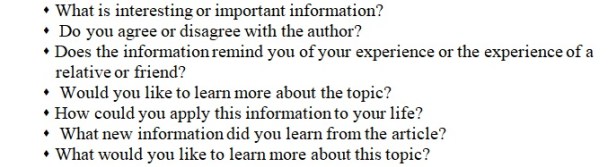
  • Each unit includes at least one “Reflection” exercise in which students write:

Reflection items image

  • Other uses of the articles:
    as a prompt for discussions.
    as a prompt for writings.

The Reasons Why these Units are Not Being Sold as a Book.*

Continue reading

• Don’t Wastes Students’ Energy Teaching Certain Types of Vocabulary Words in Reading Class

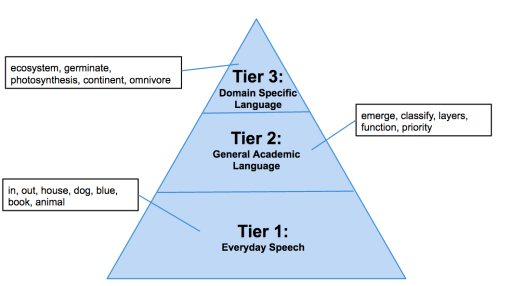
Three Tiers

“Radiance,” “strike a deal,” “gorgeous” “ecosystem.” In my 40 years of teaching academic ESL, I’ve probably seen these word in a reading passage at most only once or twice.  And I’ve never seen a student use them in a writing task.  And yet, these words were  included in several vocabulary exercises in a textbook, and students were asked to write sentences with them.  Because the words were in a reading passage, the author of the textbook, for some reason, decided that these were important words for students to study and try to internalize.

I think most of us would agree that spending time on a words so rarely used as “radiance” or “strike a deal” is probably not the best use of students’ precious time and mental energy if our true goal is to help them develop their reading skills.  At the same time, many of us who have studied a foreign language would agree that reading comprehension is enhanced by knowledge of a lot of vocabulary words.

At this point, two questions come to mind: (1) How do learners increase their vocabulary, and (2) which vocabulary words would perhaps be beneficial to study through exercises?

Continue reading

• The Most Effective Classroom Organization for Reading Skills Development (Student-Centered)

Reading book

Here is what seems to be some well-kept secrets about reading classes.  The teacher doesn’t have to be the center of attention.  The teacher doesn’t have to “act” like a teacher, standing up front talking.

And most of all, students will not be bored or waste time if they are reading individually during class.

What students need from the reading teacher is someone who can help each individual student develop their reading comprehension skills.  A student doesn’t need to listen to a teacher explain to the class parts of a passage he/she already understands but that a classmate doesn’t.

Students can get the maximum benefits from a reading class and from a reading teacher through a reading workshop.  This student-centered workshop approach has proven effective at all levels and with students from over 40 countries.

One of the greatest advantages is that each student’s individual needs are addressed by the teacher during the class.  Another advantage is that students are working on reading by actually reading.  Also, they don’t have to wait for classmates to finish reading a passage or feel pressure to read faster to keep up with them.

Here is how a Reading Workshop can be effectively organized.

Continue reading