
(This posting includes a handout which you are welcome to use with your students.)*
Some reasons why students seemed stimulated by this discussion:
- They were interested to hear how their classmates used social media.
- They thought it was funny how they tended to post positive events in their lives rather than negative.
- The article stimulated them to be “honest” about their reactions to the effects of social media.
- They discovered that some of their classmates have stopped using social media.
Here is the basis for this discussion: In an episode of NPR’s “Hidden Brain,” Shanker Vedantam explores the effects that social media can have on people. He shares examples of people who found themselves feeling dissatisfied with their lives after comparing themselves with others. After reading the one-page article that I drew from that episode, my students were eager to share their experiences with their classmates. The ideas in the article seemed to resonate with them.
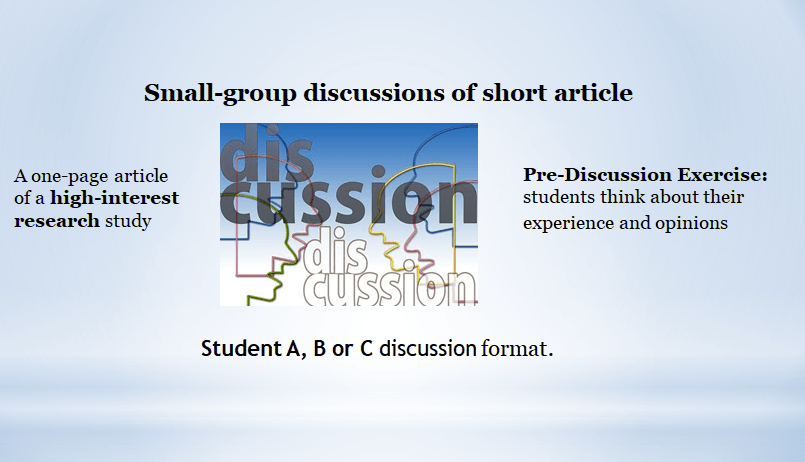
This and future discussion activities include four parts:
1) A one-page article usually including a brief summary of a high-interest research study.
2) Ten true-false comprehension questions.
3) Pre-Discussion Exercise in which students read and think about several questions about their experience and opinions about the topic before discussing them in groups.
4) Small-group discussions of the article in which each student is given a paper with different content/personal experience questions in the form of Student A, B or C.
 Common Sense Teaching ESL