Category Archives: *ESL CONVERSATION & DISCUSSION TECHNIQUES

These postings include conversation activities, teaching techniques, strategies for groupings and evaluations.

• LINCS Topic 2 What instructional strategies have you found to be motivating for English learners? 

Cover Motive Blog June 2023 REV

(This posting includes a handout which you are welcome to use with your students.) 

This posting is a more detailed response to my interview question on Day 2 .LINCS Discussion: Student-Centered Approach to Teaching Writing Skills. .

Below in blue, you’ll find the details that I’ve added to the Day 2 LINCS’ posting.

I have found six ways to motivate students.

1) Give Students Autonomy

According to psychologist Edward Deci, the most important ingredient for motivating students is autonomy. 1

Having autonomy doesn’t mean that students decide what is taught in a lesson.  Instead, students can experience autonomy if the lesson is set up so that they can individually choose which exercise to do first, second etc., how fast to work, when to ask the teacher a question or for help and even when to take a break.

A writing-workshop approach is an excellent way to give students autonomy. Here is how it can be done:

Step 1) The teacher briefly explains the assignments that student will be working on during the class.

Step 2) S/he returns any homework assignment that students had turned in and which the teacher had marked. They will correct these and show the teacher, but they DO NOT start writing yet.

Step 3) If there is a group-activity, the students do that.  As each group finishes, they don’t have to wait for the others to finish.  Instead, they start the assignments from Steps 1 and 2 individually.

Step 4) AUTONOMY!  Students start the assignments by individually choosing which one they want to do first, second, third.   At any time, they can ask the teacher any questions they might have and show him/her corrections from the returned assignment.

Some of the benefits of the Workshop

Continue reading

• Recommended Treasure Chest for Writing Your Own ESL Materials

Treasure Cover shot

I wanted to encourage my Writing students to include information from their own country to support their ideas in their essays. If done well, this kind of information can be very enthralling for anyone who reads their papers. (See • The Huge Advantage International Student Writers Have Over Their American Classmates )

The problem was that, when they tried to do this, the information was often too general, which made it sound kind of trite. So, I decided to write an exercise in which they would see how effective detailed information could be.

For the exercise, I wanted to juxtapose weak short paragraphs with few details to strong ones with more , and then have students identify each type. The challenge for me was to come up with stimulating content for these short paragraphs.

Fortunately, I had a treasure chest filled with interesting content that I could draw from. And as I’ll demonstrate below, this treasure chest has been my go-to place when writing materials for all the other skills too.

Here is what is in my treasure chest.

Continue reading

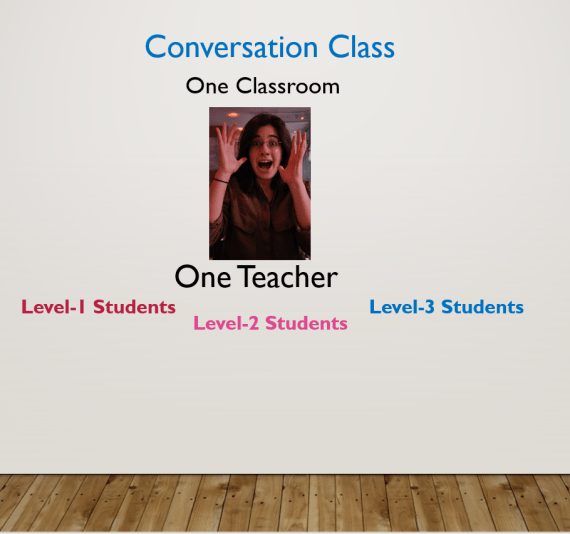
• Meeting A Conversation Course Challenge: Three Levels of Students, One Classroom, One Teacher

Cover multi level Shot

Having three levels of students in one classroom can be overwhelming. But for a reading-skills or writing-skills course, it seems relatively do-able because students can work individually on the reading or writing tasks.

However, for a conversation course in which students need to be interacting with classmates, it’s impossible right? No, it’s definitely possible.

Here is how it has been done successfully with a user-friendly approach for the teacher and with students developing their skills as they would in a single-level class.

Continue reading

• The Power of Listening Input for Language Learners

Cover pt lover revised

(True story.) It’s the September of 1985, the year that Stevie Wonder released an international hit song. I’m on campus in Japan and happen to run into a couple of my students from spring term, Yuki and Hana.

“How was your summer?” I ask.

“Wonderful! I went to Europe with my family,” Yuki says.

“That’s great! How about you Hana?”

“Interesting. I had a part-time lover,” Hana answers.

Both Yuki and I look astonished and laughingly ask simultaneously, “You had a what?!!”

“I had a part-time lover. … Oh, no, I mean I had a part-time job!” Hana replies with some embarrassment when she realizes what she had said.

She then explains how she had often heard Stevie Wonder’s “Part-Time Lover” during the summer.

Hana’s automatic response to my question demonstrated the power of listening input. Since then, I’ve found ways to tap into it’s potential in helping student internalize grammar concepts and new vocabulary, and even how to write paragraphs and essays.

Continue reading