Category Archives: *ESL CONVERSATION & DISCUSSION TECHNIQUES

These postings include conversation activities, teaching techniques, strategies for groupings and evaluations.

• Most Confusing ESL Pronunciation Mistake (Includes Interactive Exercises)

Cover pron shot

(This posting includes a handout which you are welcome to use with your students.) *

There has been a consensus among the many professionals that I have asked that dropping the final consonants on words causes the most communication breakdowns. I’ve had to decipher things like:

“I cou-n do my homewo cu I fe si.” (I couldn’T do my homeworK because I felT sicK.)

“Do you wan ah to chew a new topi?” (Do you wanT uS to chooSE a new topiC?)

If we just respond by asking, “What did you say?”, the speaker will merely repeat what s/he had said, perhaps a bit louder.

I developed a set of exercises that have proven to be effective in developing students’ self-awareness in the cause of some of their communication breakdowns. So now, if we ask “What did you say?”, the speaker will have a sense of the cause of the breakdown and of a way to adjust what they had said.
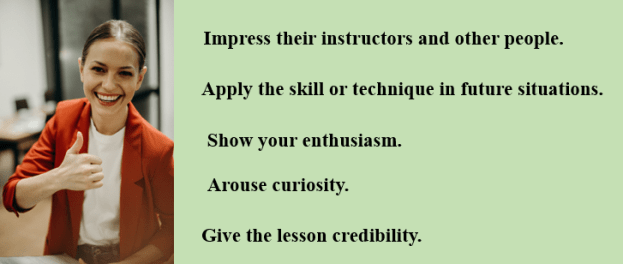
What you’ll find in the downloadable exercises

Continue reading

• Introducing any ESL Lesson: FIVE Effective Ways

COVER Intros

I need to start by making a confession. After I had been teaching ESL for about 10 years, I suddenly realized that I had become a bit careless about something important.

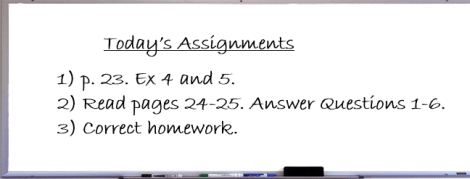
Here is what happened. As I mentioned, I was in my 10th year of teaching ESL, and I was asked to teach a course to American university students who wanted to become ESL teachers. One day, I planned to demonstrate a lesson. The first thing I decided that I need to tell them is that it’s really important to have a good introduction to the lesson. You don’t just want to tell students, open your books to page 23. Your assignment is to do Ex 4 and 5.

Slide 1

But wait! That is exactly how I had been starting my ESL classes recently. I realized that in my effort to get the lesson started, I had stopped doing a very important first step. And as a result, I missed an opportunity to stimulate and motivate my student.

So as I prepared to show my teacher-training students ways that they could introduce lessons, I returned to my days as a beginning teacher and started to use them once again with my ESL students. And I have to tell you, the results were amazing. I could see it in my students’ faces how much more energized and eager they were to do the activities. And I felt not only excited about teaching them but also confident in the importance of the activities they were about to do.

Perhaps the greatest motivator for students is feeling like they are working toward something worthwhile and are doing something important. We can satisfy this need in students by explaining the reason for the assignment.

So here are four great techniques that you can use to introduce your lessons.

Continue reading

• Final ESL Conversation Speaking Tasks:  Most Meaningful Evaluation Forms

Oral exams PART 3 COVER REV

(This posting includes a handout which you are welcome to use with your students.) *

In Part 1,   • Common Challenges and Goals for Final ESL Conversation Speaking Tasks , I described the challenges Conversation teachers face when deciding which students should be promoted to the next level. In Part 2, • Final ESL Conversation Speaking Tasks: Rating Three Methods I compared three different methods for determining this.

In this Part 3, I’ll share some final tasks for pairs and triads and evaluation forms that teachers can use to help them make the decision about the level each student should be in the next term.

My colleague was totally dumbfounded early in the term. Somehow some unprepared students in her Level 4 Conversation Class had been passed from Level 3. Then we found out how this happened. For the final task in Level 3, the teacher had students do presentations. Their final grade was mostly based on how well they had prepared and memorized their presentation monolog. Thus, students who had not developed actual conversation-skill techniques, like asking questions, using rejoinders, responding with details, and asking for clarifications, were able to pass Level 3.

In a truly student-centered Conversation class, most activities will revolve around students working in pairs, triads and small groups. Also, during the activities, they will be practicing techniques that will help them develop their conversation and discussion skills. Thus, it makes the most sense that their final task should mirror those two points.

Sample final task formats and evaluation forms.

(Notice: These could be used as a midterm and/or final exam.)

Continue reading

• Final ESL Conversation Speaking Tasks: Rating Three Methods

REVISED Oral Exams Part 2 Cover shot

In Part 1, I described the challenges Conversation teachers face when deciding which students should be promoted to the next level. Also, I had included descriptions of the skills that teachers should consider when determining which students at five different levels should demonstrate in order to pass.

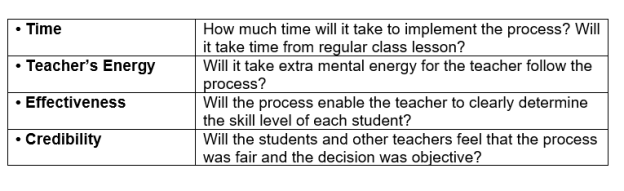
In this Part 2, we will analyze three methods teachers can apply to a final conversation task using these criteria:

Time teacher energy SHOT

The three methods including a recommended one.

Continue reading