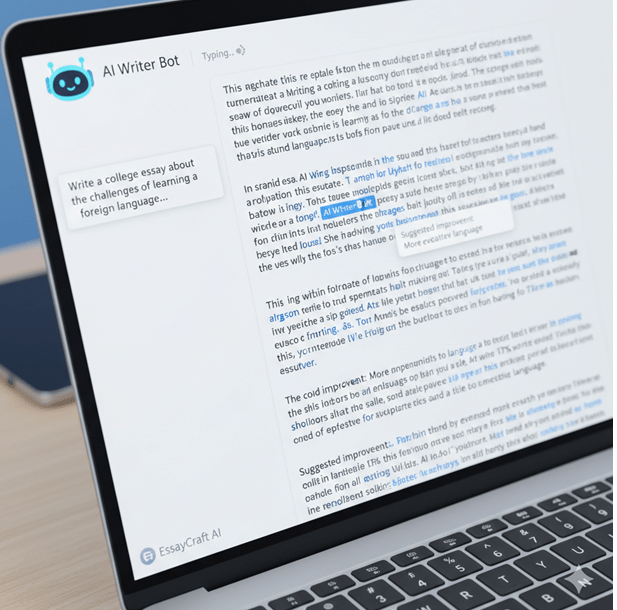
Dealing with students who plagiarize now seems like a piece of cake compared to ones who now use AI to write their papers. I could usually deter students from plagiarizing by demonstrating how easy it is for teachers to find it.
Early in a term, I would show this paragraph that may have been written by a student:
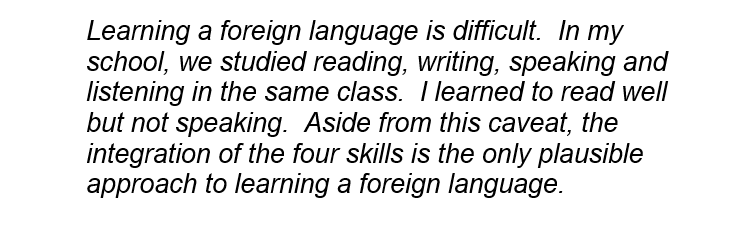
I’d ask them if they thought the writer had copied any of the sentences from a source. Unsurprisingly, they always spotted the last one. It was a clear signal: if a student can identify it, a teacher definitely can.
However, the rise of AI has shattered that approach.
Why the old technique doesn’t work anymore
Now, I can no long claim that it’s easy to find plagiarism using the sentence, “Aside from this caveat….” If a student plugged that into AI, it could come out as, “Even with this problem, I still think that learning the four skills together is the best way to study a foreign language.”
The vocabulary is simpler, the tone is conversational, and it is incredibly difficult to prove the student didn’t write it themselves.
According to reports from NPR and other outlets, many schools are spending thousands of dollars on AI-detection software. Yet, research shows these tools are far from reliable and frequently produce false positives. Few things are more discouraging for students than working hard on a paper and then being accused of not writing it themselves.
The “Incentive” Approach
Discouraging students from using AI involves a two-prong approach. First, they should see that it won’t help them pass the course. And second, they must realize they are missing opportunities for the teacher to help them actually improve their writing.
Using AI won’t help them pass the course
Instead of basing the final grade on their writing on papers in which they could conceivably use AI, we can set up situations in which it would be impossible for them to do so. One way to do this is to include a few essays written in the classroom during one class period. In order to pass the class, they must demonstrate the necessary skills on both the out-of-class and in-class essays. Also, if there is a massive gap between the “home” essay and the “in-class” essay, it opens the door for a productive conversation about their writing process.
By relying on AI, they will miss opportunities for the teacher to help them improve their writing.
There’s an effective approach to helping students see the potential for improving their writing skills. First, students turn in a piece of writing that we know has not been AI assisted. Then, through a series of hints/clues and suggestions, we lead them to understanding how they can improve the paper. In other words, they apply their background knowledge about grammar and writing techniques to this new context. It’s almost like solving a puzzle.
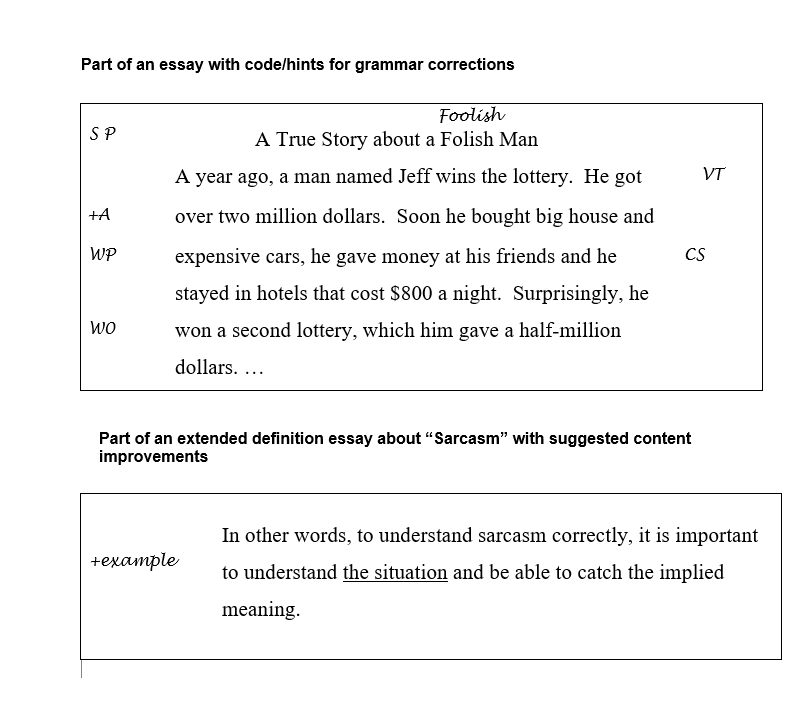
(This is how that student added an example: For example, to say, “You are not smart” to a student who got a poor grade is definitely an insult. However, to say, “Congratulations, you did a great job!” to that same person is an example of sarcasm.)
By relying on AI, students will find that praise from the teacher feels empty.
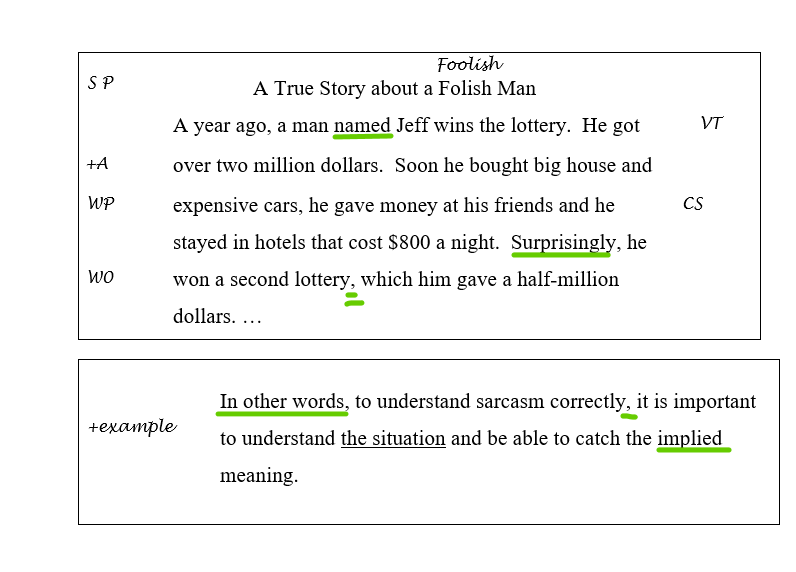
We can further motivate students to write their own papers without AI through specific praise. An easy, teacher-friendly technique is to underline in GREEN grammar, vocabulary and content that we want to praise students for.
Through this approach, they get to experience “structured creativity” and the satisfaction that can only come from seeing the final product that they themselves had written.
We can apply this approach to out-of-class essays, giving them feedback by way of hints/clues, suggestions and positive re-inforcement. If their essay was written by AI, they will notice few or no hints for improvement. They may see “greens,” but those points of praise would be shallow. Perhaps they will be given a high grade because it would be difficult to prove that it was AI generated; however, the satisfaction from that high grade would have its limitation since they also need to show that they can pass in-class essays to pass the course.
The evidence that this works isn’t just in the lower rate of suspicious papers—it’s in the student’s attitudes.
In course evaluations, students have expressed an overwhelmingly positive response to this feedback loop. I’ve even instituted a policy: If you want this detailed, personalized feedback, you must be in class on time and turn in assignments on schedule. It is almost humorous to see how earnestly students now apologize for being five minutes late. They aren’t afraid of being caught; they are afraid of missing the feedback. They’ve realized that while AI can write a paper, it can’t help them become better writers. Only they—and a little bit of green ink—can do that.
For more about a stimulating in-class writing activity, see • Fluency Writing: Reading, Speaking In Triads, And Listening Culminating In A Writing Task
For more about giving hints and clues about grammar in a piece of writing, see • Most Effective Technique for Marking Grammar on Essays to Develop Self-Editing Skills
• How to lead ESL Students to Discover their Grammar Mistakes on Writing Assignments
For more about giving focused positive feedback on essays, see Writing class: Easy, focused, POSITVE feedback on essays.
For more about improving content is essays, See • Powerful Tool for ESL Writers: Giving Examples in Essays.
For more about improving content is essays, See • Powerful Tool for ESL Writers: Giving Examples in Essays.
For more about determining if a student had demonstrated the writing skills need to pass a course, see • User-Friendly Writing Panel Process: Time and Energy Efficient And Effective
David Kehe
Faculty Emeritus
*About the free-download materials. During my 40 years of teaching ESL, I have had many colleagues who were very generous with their time, advice and materials. These downloads are my way of paying it forward.
 Common Sense Teaching ESL