• Leading Student to Understand It
• He It is easy to do math.
• Was raining at noon.

(This posting includes a handout which you are welcome to use with your students.) *
Pointing to this sentence: “It started raining during the game,” Sylvia asked me what the word “it” was. “How can I know when to use it?”
I told her the grammar term for it (‘non-referential it’), but I didn’t tell her any rules. Instead, I led her to understanding it through a set of inductive exercises. This meant that she “formulated the rule” correctly on her own by working with examples.
Some typical problems students have with this are when they write sentences like these:
• Was raining after work.
• He is easy to do math.
Inductive exercises to lead students to understand non-referential “It” as the subject of a sentence.
(This post includes a short form of the exercises. On the handout in the link below, you can see more items for each exercise.) Notice: This does NOT involve any TEACHER TALKING.
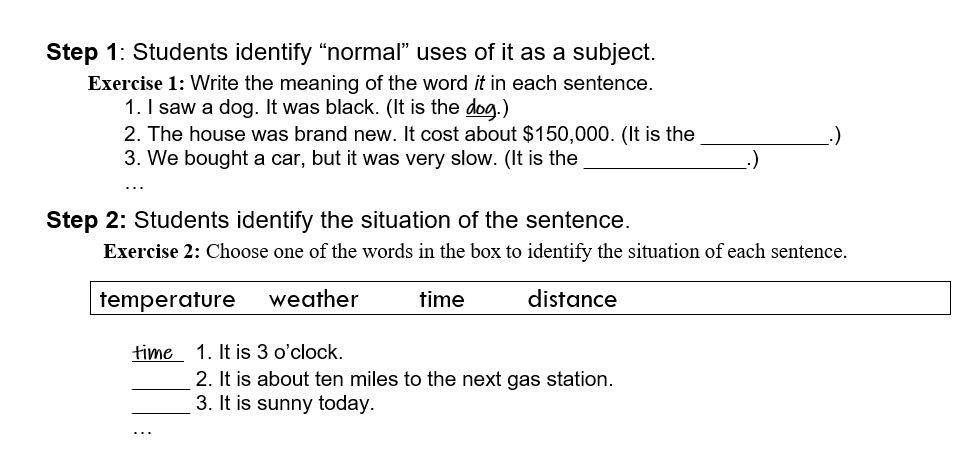
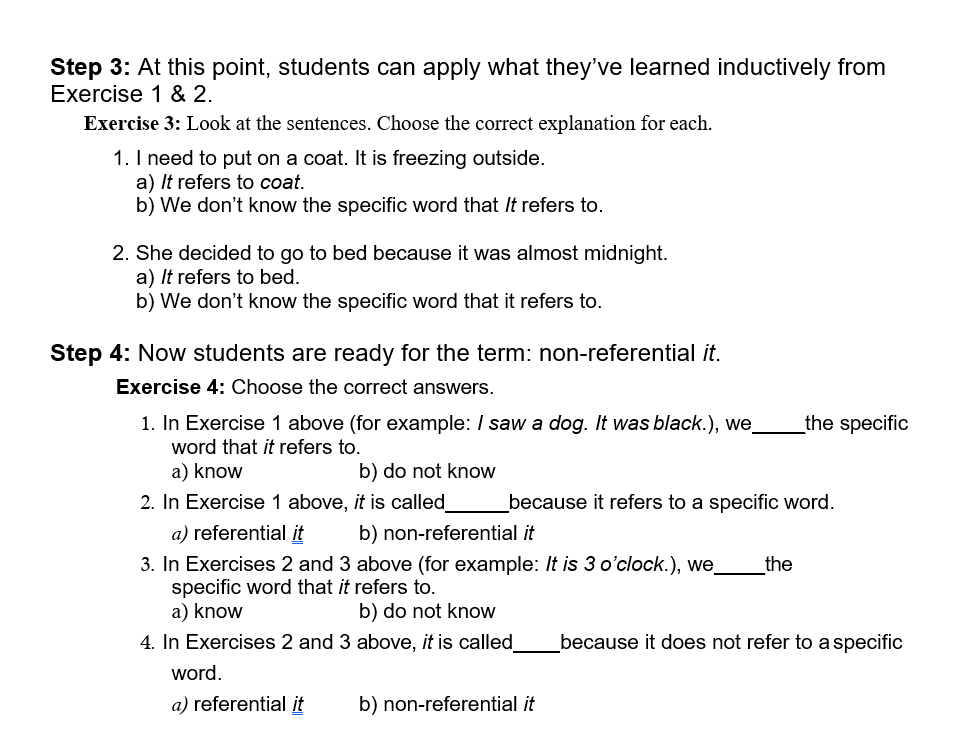
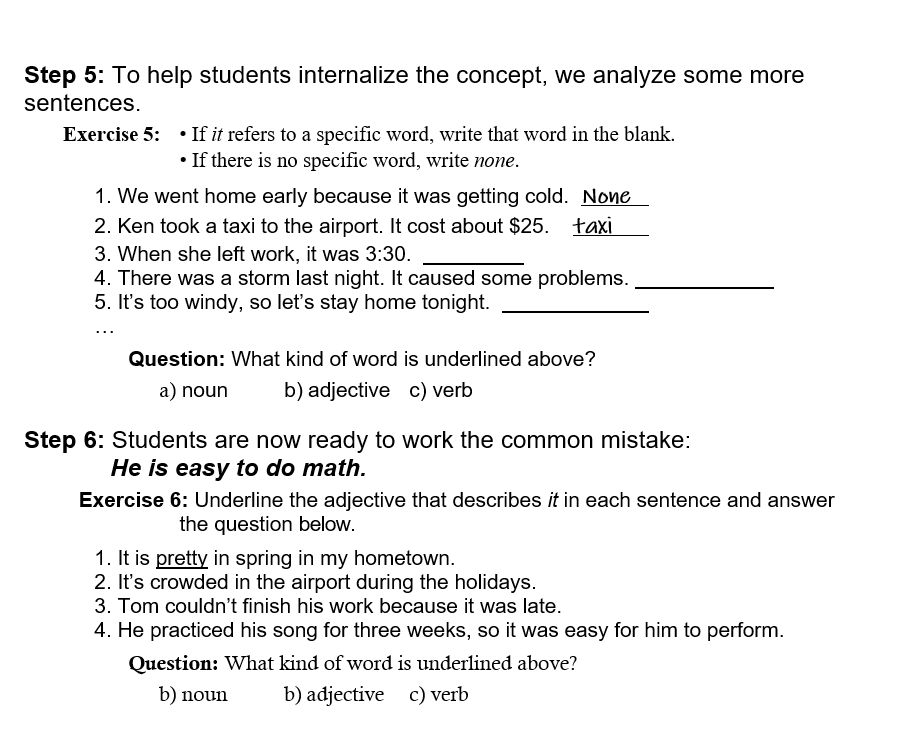
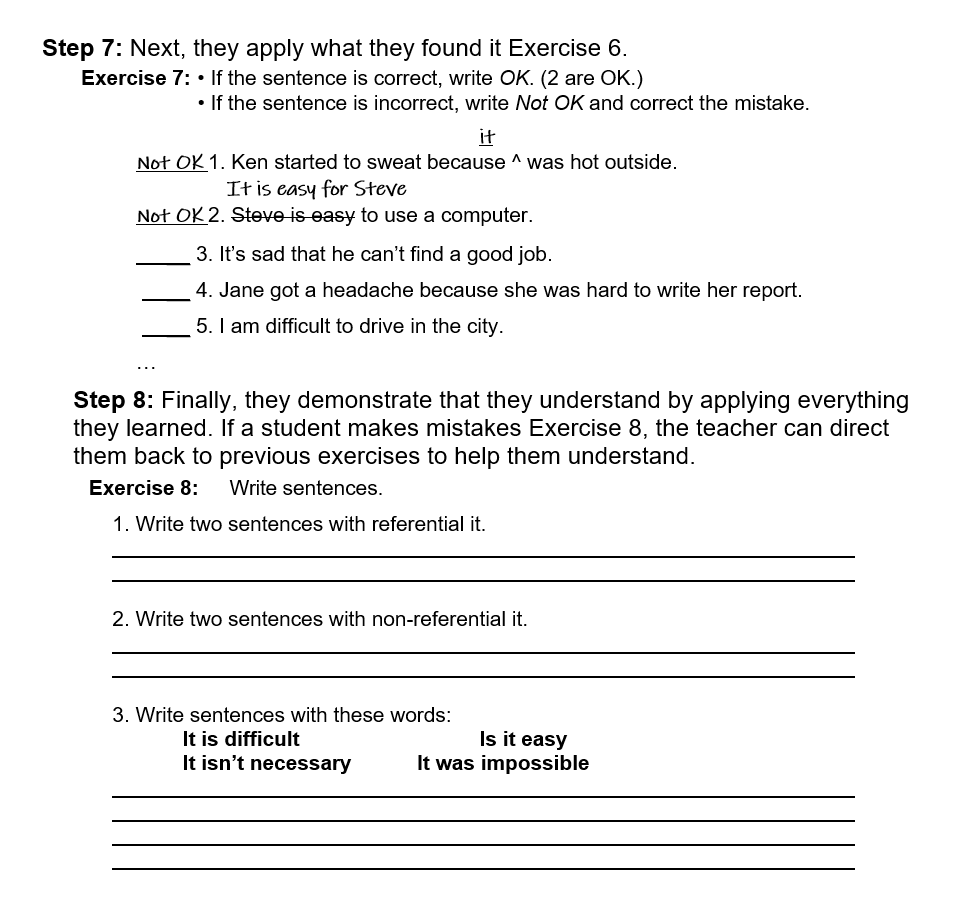
Here is the link to the complete exercise. Feel free to download it and use it with your students. GRB non-refer IT
For more inductive exercises, see
• “Finally I now Understand What Nouns, Subjects and Verbs are.” (And it took only 30 minutes to learn inductively.)
• Inductive Grammar: Why are there commas in these sentences? Here are some clues. What’s the rule? (Revisit)
• “Finally I now Understand What Nouns, Subjects and Verbs are.” (And it took only 30 minutes to learn inductively.)
For more similar exercise to lead students inductively to understand grammar, see The Grammar Review Book: Discovering and Correcting Errors
David Kehe
Faculty Emeritus
*About the free-download materials. During my 40 years of teaching ESL, I have had many colleagues who were very generous with their time, advice and materials. These downloads are my way of paying it forward.
 Common Sense Teaching ESL