Tag Archives: small-group activity

• Developing Paraphrasing Skills: Oral Paraphrasing Before Written. (Revisited)

Cover paraphrasing shot

(This posting includes a handout which you are welcome to use with your students.) *

YouTube I discuss this posting in this video: Developing ESL Paraphrasing Skills Naturally: Start with Oral Paraphrasing Exercise
A good paraphrase can demonstrate to the teacher that the student truly understood the source. And if it is clearly written in the student’s normal style and level of vocabulary, the teachers can feel reassured that the writer wasn’t plagiarizing.

Paraphrasing may be a new concept for many of our ESL student. However, we can help them understand how to do it in a way that will let them “experience” what a good paraphrase is through a very natural process.

Continue reading

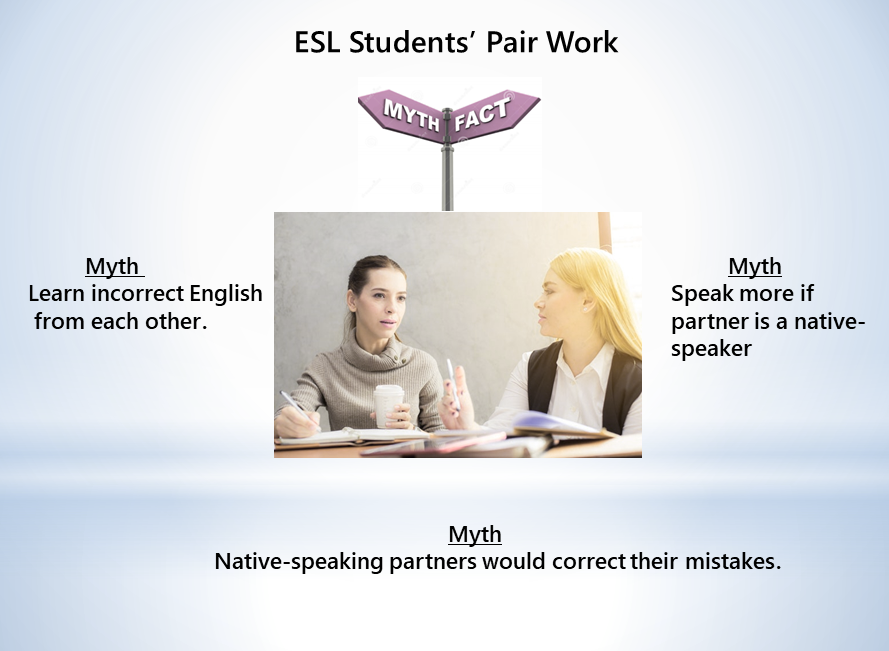
• ESL Conversation Class: What If They Make Mistakes In Pairs? Myths About Pair Work. (REVISITED)

Myths pair work cover shot

A teacher once said that she avoided pair work during conversation lessons because she wouldn’t be able to monitor all the students to catch their grammar mistakes.  Is this a legitimate reason?  Researchers have studied what, in fact, happens when students work in pairs with other students and when they work with non-native speakers which can dispel some of the mis-assumptions about the drawbacks to pair work.

Continue reading

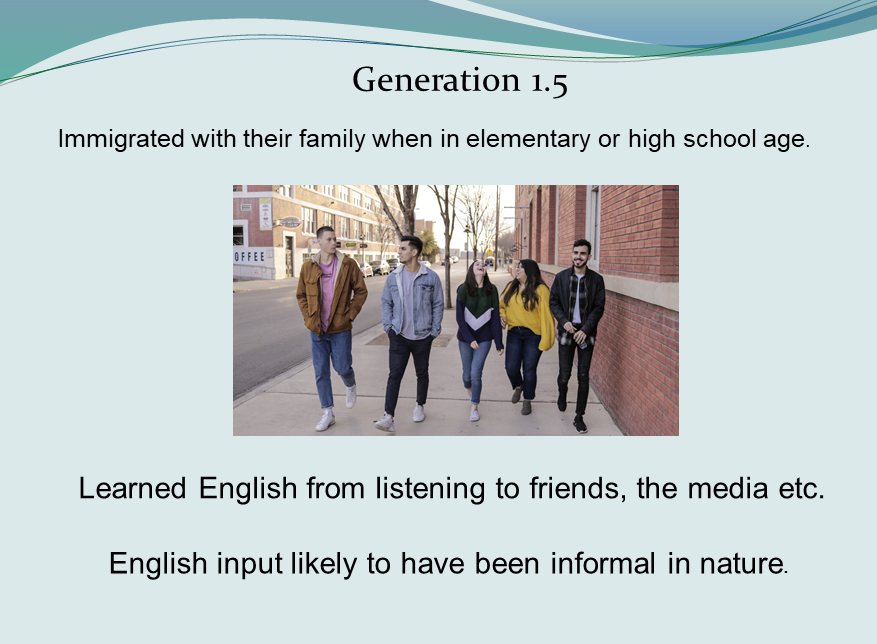
• Approaching Grammar with Generation 1.5 Students and Other Ear-Learners (REVISITED)

Cover Gen 1.5

(This posting includes a handout which you are welcome to use with your students.)*

In our college, there was a category of ESL students who stymied the instructors.  They were fluent speakers but continually struggled with basic the grammar on writing tasks.  Any ESL program that has immigrant students will probably have these types of students described as “ear-learners” or Generation 1.5.

Gen 1.5 students are sort of between first generation and second generation immigrant.  They immigrated with their family when they were elementary or high school age.

A growing number of these students indicate a goal of obtaining a college degree.  However, unfortunately, many of them struggle to make the transition from studying basic English skills in ESL courses to taking academic ESL and mainstream academic courses.

Among those who do apply to colleges, a considerable number do not meet the minimum standards for writing and are thus not accepted.

I, along with two colleagues, were able to get a grant a few years ago to study these students and to develop an approach to helping them learn grammar for writing by taking into consideration their special learning styles.

In this posting,

  1. I’ll describe these students and their learning styles.
  2. I’ll also explain the type of materials and include examples that we used with them.
  3. And finally, I’ll summarize the very positive results that we got from the study.

Continue reading

• Stimulating Small-Group Discussion Activity 2: Loneliness Might Not Be What You Think (Including Paraphrasing Exercises.) REVISITED

Cover read for discussion SHOT

(This posting includes a handout which you are welcome to use with your students.)*

Some reasons why students seemed stimulated by this discussion:

1) Since almost all the students were living away from home, they were able to relate to the challenge of connecting to new people.
2) They seemed interested in hearing how their classmates were coping with living away from home: some loved it and some felt lonely.
3) They enjoyed discussing how social media is both helpful and harmful especially concerning making connections to people.
4) They seemed surprised that some of their classmates are not especially connected to their family members.

Here is the basis for this discussion: According to research, loneliness has little connection to how many people are around us.  In his book,  Lost Connections,  Jonathan Hari explains that loneliness is caused by a loss of connection to others. To end loneliness, according Hari, we need two things: other people and a feeling that we are sharing something meaningful or something we care about with another person or other people.

This and future discussion activities include four parts:

1) A one-page article usually including a brief summary of a high-interest research study.
2) Ten true-false comprehension questions.
3) Pre-Discussion Exercise in which students read and think about several questions about their experience and opinions about the topic before discussing them in groups.
4) Small-group discussions of the article in which each student is given a paper with different content/personal experience questions in the form of Student A, B or C.

Bonus for this Discussion Activity 2: Paraphrasing exercise.

About Discussion Activity 2: Loneliness Might Not Be What You Think and the handout.

Continue reading