Category Archives: • After Class

• Pain-Free ESL Speaking Placement-Testing Process: Reliable, Time-Efficient and User-Friendly REVISITED

Cover ppt shot

(This posting includes a handout which you are welcome to use with your colleagues.)*

At first, all the teachers wanted to administer the oral test for placing students into one of the four levels of conversation classes. But that enthusiasm waned once they discovered what this commercially-made placement test would entail.

Two major problems with many speaking placement tests (commercial and in-house)

1)  The testing process in labor intensive. The scoring rubrics are onerous, ineffective and require time-consuming training.

2)  Rather than just focusing on the skills being developed in speaking/conversation classes, the interviewers have to evaluate several peripheral aspects of speaking at the same time.

A Speaking Placement-Testing Process That Addresses Those Problems.

Continue reading

• Interviewing Candidates for a Writing-Teacher Position: Learning Their Approach to Dealing with Grammar in the Writing Context

job interview woman

Our search committee for ESL Writing teachers completed the applicants’ interviews. However, unlike previous searches, we all felt completely confident in our ratings of the candidates. This was because of one part of the interview process that we had recently added.

Research of mainstream college instructors at our college showed that they expect students to have control of the grammar in their papers. Thus, our ESL Program realized the importance of selecting candidates who understood how to deal with grammar in the writing context. For this reason, we developed a part of our interview process that has been very effective for helping us choose the most qualified Writing teachers.

Continue reading

• High Early Grades in a Course: Motivating or Dangerous

Low grades Cover shot

At the end of the term, the Level 3 Writing teacher Pam (not her real name), was filled with turmoil. She had shared samples of her students’ papers with our Writing Panel (a group of five Writing teachers.) After reading the papers, the members felt that four of her students’ writing skills hadn’t developed enough to pass to the next level. Thus, the members recommended that those four repeat Level 3.

Pam acknowledged that the students’ skills were weak and said that two of them were expecting to fail. However, the other two would feel shocked.

At the beginning of the term in September, Pam liked to give students high grades on assignments. She was worried that low grades would discourage them. As the term progressed, she continued to score high those students who made a good effort, thinking that would keep them motivated. But now it was December, and she was caught in a dilemma: either pass those two students who would struggle greatly in the next level or shock and disillusion them with the news that they had failed.

In his book, Punished by Rewards, Alfie Kohn, discusses meaningful perspectives about and approaches to giving grades. By incorporating many of her ideas, we can avoid the pitfall that this Writing teacher had fallen into.

Continue reading

• Getting Backed Up with ESL Paperwork: Effective Solution

Cover shot

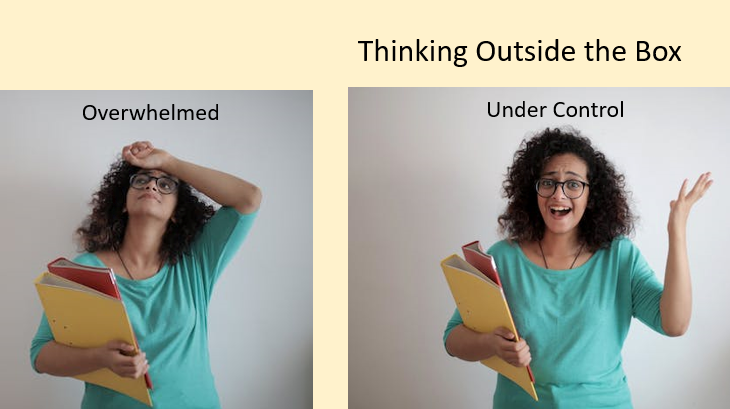
There seems to be certain times during a term when we can feel a bit overwhelmed by the amount of paperwork coming in. During those times, it makes sense to establish some priorities concerning how we approach “marking” the various assignments.

It’s sometimes tempting to rationalize not giving any feedback on or returning some homework assignments by thinking that there are intrinsic benefits for students to just do the exercises. We say to ourselves that it’s not absolutely vital that they get them back quickly (or even, in some cases, ever). Thus, we might consider doing a “triage” with assignments. Essays might get top priority for our time and attention with “lesser” assignments just filed away or held off until sometime in the future when we are all caught up.

Surprisingly, this feeling of being overwhelmed can actually open up a motivation to respond to homework assignments in a way that is more effective than how we would “normally” do it when we have plenty of time.

Continue reading