Category Archives: 09 ❖ MOTIVATING ESL STUDENTS AND TEACHERS

These posting include techniques for motivating ESL students and perspectives for motivating teachers.

• Avoiding Writing-Teacher Burnout: Save Your Time And Energy With This Effective Method For Giving Specific Feedback.

Many teachers mistakenly believe that spending their precious time and energy writing long comments at the end of students’ papers is what Writing teachers should do.  As one instructor wrote in The Chronicle of Higher Education: “I am an English professor, and responding to student writing is what we English professors do…For 25 years, I have diligently, thoughtfully, and fastidiously written comments on my students’ essays. In my neatest hand, I’ve inscribed a running commentary down the margin of page after page, and at an essay’s conclusion I’ve summarized my thoughts in a paragraph or more.”

This instructor decided to stop writing comments on her students’ paper after she came to this realization: “Most students seemed to spend little time taking in my comments on their papers. They quickly skimmed, looking for the grade, and then shoved the papers into their bags.” Her solution: Instead of writing comments, she decided to meet in her office to discuss her students’ papers one-on-one.

For most ESL Writing instructors, meeting with students in their offices is not a realistic option. At the same time, writing long comments at the end of papers is often a waste of time and energy, just as that professor discovered.

It seems that there are two approaches to giving feedback to each student

General Feedback Approach

Part of problem with giving general feedback at the end of an essay is that the comments tend to be so generalized that there is little for students to apply to future writing assignments.  For example, here is what one teacher wrote:

Continue reading →
• Enjoyable and Effective Awareness Activity for Changing ESL Students Classroom Behavior

Cover skits Shot

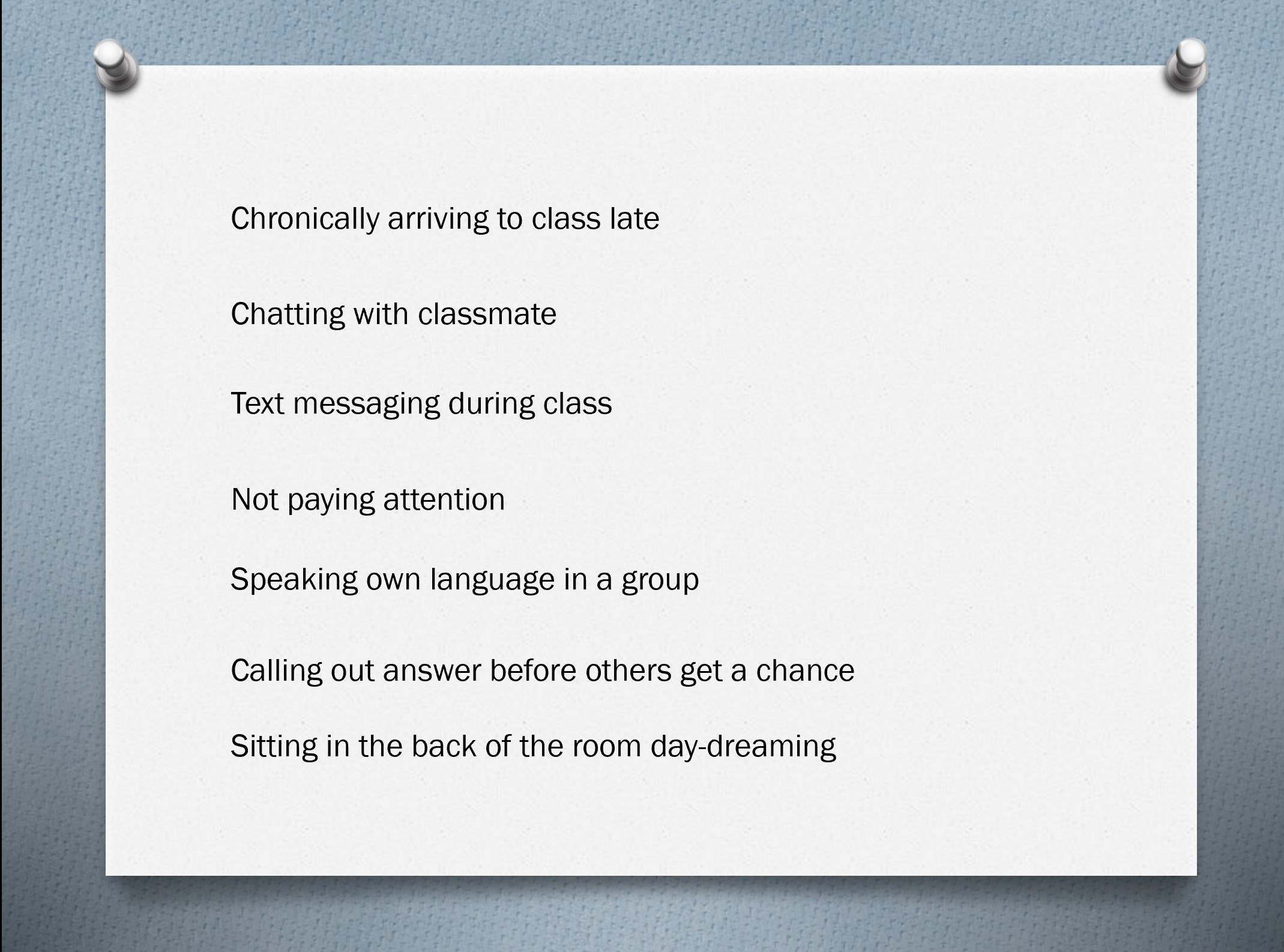
Most ESL students don’t do goofy things just to irritate the teacher. Usually, they are unaware of how they are coming across or not aware that they are acting differently from the other students or even what is expected of them.  These are some of the habits students tend to bring to our classes:

  • Chronically arriving to class late
  • Text messaging during class
  • Not paying attention
  • Chatting with classmate
  • Not participating in a group
  • Calling out answer before others get a chance
  • Sitting in the back of the room day-dreaming
  • No eye contact to teacher or classmates in a group
  • Speaking own language in a group
  • And more

To circumvent these habits and help students develop an awareness of expectations, in the two most recent ESL programs that I’ve taught in, we included some skits during our orientation of new students or during a workshop for students after the term had started. Not only did the students seem to enjoy them, but also we noticed far fewer students coming to our classes with these behaviors.

Here is how we did it.

Continue reading →

• ESL Writing Workshop: Tremendous Benefits for Students and Teachers

Blog Workshop Cover Shot

(This posting includes a handout which you are welcome to use with your students.)

In this YouTube video, I describe the Writing Workshop Approach to teaching ESL writing skills. This approach has been successfully used by a large number of teachers. Some of the many benefits include motivating students by giving them autonomy and allowing teachers to conference one-on-one with students during the class time rather than outside class.

Here is the link to the YouTube video:ESL Writing Workshop on YouTube

Here is a link to where you can read more about the steps in the workshop approach and find a specific model lesson plan with free downloadable exercises/activities.

Continue reading →

• Getting Students to Write More Interesting and Unique Ideas in Essays

Argumentation list

(This posting includes a handout which you are welcome to use with your students.)*

After your students do this exercise, reading their essays will be much more stimulating for you.

I felt a bit deflated while reading an essay by Jojo, one of my higher-level students. His title was “It’s Best to Marry Someone from a Foreign Country.” From reading his previous essays, I knew he had the potential to be a very good writer with interesting ideas, but on that essay, he just supported his opinion with content that I would expect from students at lower levels.  For example, here is his list of simple support for marrying someone from a foreign country:

  • We can learn a foreign language more easily.
  • We can enjoy eating different kinds of food.
  • We can go easily to a foreign country for vacations.

Although I don’t believe that we, as ESL instructors, should expect our students to keep us stimulated with deep ideas,  (see my posting “Wow” is not Necessarily the Goal in Students’ Essays) we should encourage those students who have the potential to push themselves to write beyond the mundane. This is especially true for our students who are planning to take English Comp and other academic classes with native speakers.

An exercise to help students develop awareness for writing more advanced and unique ideas (handout)

Continue reading →