Author Archives: commonsenseesl

• Myth #2 about Teaching ESL Grammar: Teaching Grammar Doesn’t Improve Students’ Writing.

Cover Myths shot

I’ve always been perplexed by this claim by some teachers: Teaching grammar doesn’t improve students’ writing.  A problem with it is that it doesn’t define what is meant by “teaching grammar” nor what is meant by “improve students’ writing.”  It seems to imply that they have looked at every conceivable way that grammar could be taught and worked with, and they found that none were effective.

When I questioned their basis for this belief, I was often directed to some studies in the 1970s and 80s. Typically, these studies started with students writing a paper. Then for a period of time, they worked on diagramming sentences, doing sentence-combination exercises, identifying parts of speech and completing some grammar worksheets. After this, they wrote another paper, and surprise, surprise, the writing in their essays hadn’t improved. From this, they concluded: teaching grammar doesn’t improve students’ writing.

On top of that, one researcher claimed that his students’ writing got worse, and somehow, he even knew that it was because the students had become obsessed “with avoiding error at all costs, to the point where fluency, content, and reasoning lost their importance.” *

Some teachers have pointed to this “research” as support for their justification to not work with grammar in their writing courses. Their philosophy tends to be: students improve their writing by writing.

How Working with Grammar Can Improve Students Writing

Continue reading →

• ESL Students Can Increase Positive Emotions in Readers/Teachers with This Writing Technique

smiling teacher

(This posting includes a handout which you are welcome to use with your students.)

After reading Curry’s essays, I often came away feeling especially good. This kind of surprised me because she wasn’t among the top writers in my class. Her grammar tended to breakdown at times, and her sentence style could be a bit simple. And yet, there was something special about her papers.

Continue reading →

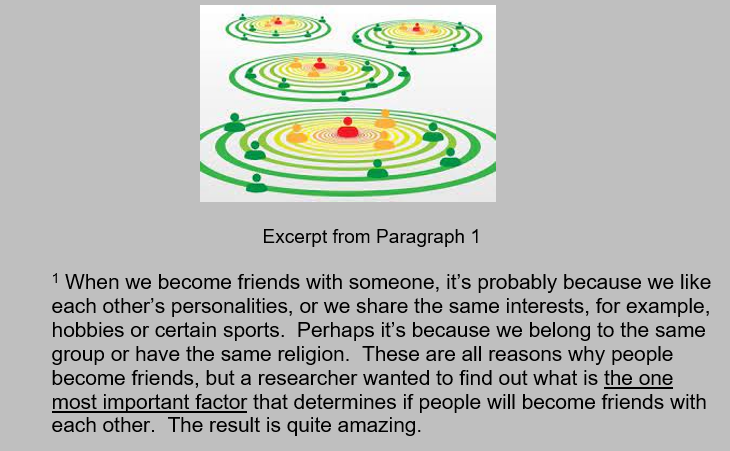
• 9th Free Reading Unit.  Surprising Research About How Friendships Are Made.

Cover proximity shot

(This posting includes handouts which you are welcome to use with your students.)

See • Reading Units: Reading for Insights (Introduction)  for an introduction to these reading units.

Article & Study Guide for Proximity: The Most Important Factor in Making a Friendship is How Close You Are Physically (and excerpts)

Continue reading →

• DON’T Teach This as an ESL Speaking Skill

Reduced Forms 2 Cover shot

(This posting includes a handout which you are welcome to use with your students and a link to a video.) *

In the video, I explain how ESL teachers can best help their students deal with reduced forms of speech. Some examples of reduced forms are
• whaddya (what are you)
• gonna (going to)
• din (didn’t)
• isn (isn’t)
•  cha > / t / + you) > I want you to start now.

It’s vital that we help students UNDERSTAND what OTHER PEOPLE are saying when they use these, but it’s COUNTER-PRODUCTIVE to tell students to use these when they speak.

The link to the video and two handout-activities

Continue reading →