(This posting includes a handout LINK AT THE END OF THIS POST which you are welcome to use with your students.) *
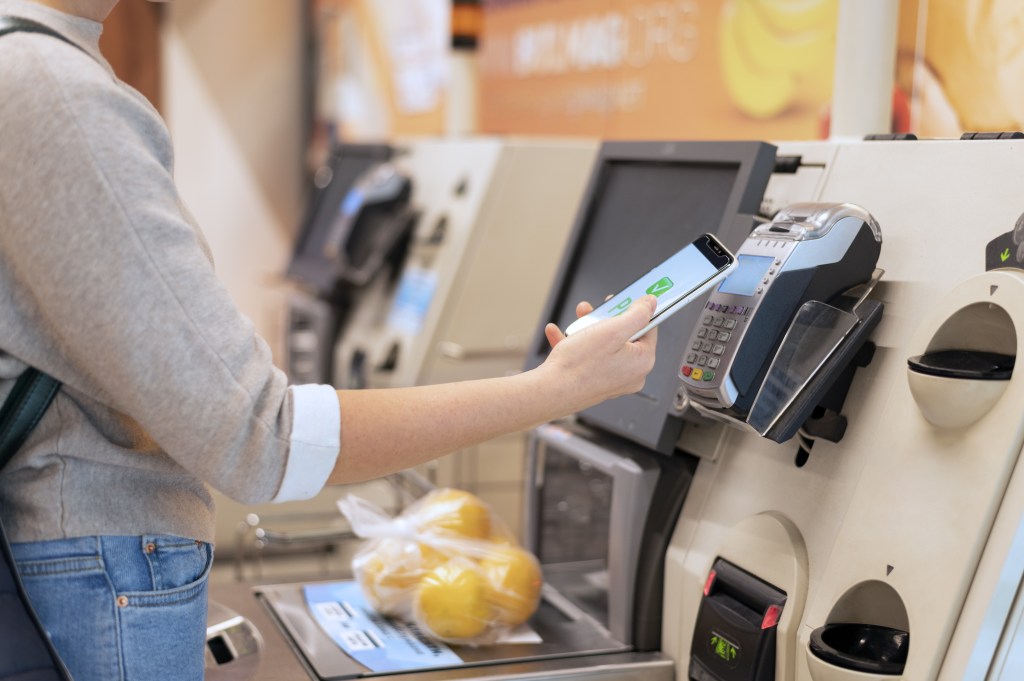
Some people thought that self-checkout machines were a great idea. The goal was to help customers save time because they wouldn’t have to wait in line for a cashier; they could scan their items and pay by themselves. Stores also hoped to save money by not having to pay as many cashiers. However, recent research shows that this system has many unexpected problems….(See complete article below.)
For background information about these articles and for suggestions for how to use them with your students, see • Introducing “Short, High-Interest Readings” Also, I’ll be adding more of these articles in the right-hand column: ESL Reading> Short, High Interest Articles for Extensive Readings
Here is the 16th article. You can download the article for your students by clicking on the link at the end. Also included are three optional exercises: True-False Questions; Paraphrasing Exercise; Reflection Exercise.
Self-Checkouts Are Not As Good As You Might Think
Some people thought that self-checkout machines were a great idea. The goal was to help customers save time because they wouldn’t have to wait in line for a cashier; they could scan their items and pay by themselves. Stores also hoped to save money by not having to pay as many cashiers. However, recent research shows that this system has many unexpected problems.
Self-checkouts can often be slow and frustrating for customers. While some think the machines are faster, customers often struggle to find product codes, especially for fruits and vegetables. This causes them to feel pressure because other shoppers are waiting behind them. A major issue is technical problems: about 70% of customers have had a problem with a machine and needed an employee’s help. Cashiers are much faster because they are trained to find barcodes instantly.
The biggest problem for stores is losing money. Although store owners at first liked the machines because they saved on employee costs, they soon found they were losing money because of theft and mistakes. It is easy for customers to forget to scan an item or to steal on purpose by pretending to scan expensive items. This issue is so common that it costs U.S. stores about $10 billion a year.
Because of the stealing, stores have to hire more security guards, which can sometimes create trouble even for honest customers who accidentally forget to scan a small item. A woman was doing self-check out at a large store. She had about 15 products in her basket, but she forgot to scan a candy bar. A security guard noticed this and took her to a room in the back of the store. At first, they told her that they were going to take her to the police station for not scanning the candy bar. But after a while, they let her leave.
In the end, many stores have decided that self-checkouts cause too many problems. The machines are expensive to buy and require staff with technology skills to fix them. Because of the issues with stealing and the high cost, some stores have removed the machines and returned to only having cashiers. A study also found that customers actually like having a chat with a cashier and are more likely to return to stores that have human checkouts.
Here is the link to the article and exercises that you can use with your students: Self-check out ARTICLE
David Kehe
Faculty Emeritus
*About the free-download materials. During my 40 years of teaching ESL, I have had many colleagues who were very generous with their time, advice and materials. These downloads are my way of paying it forward.
 Common Sense Teaching ESL