(This posting includes a handout which you are welcome to use with your students.) *
One of my insecure students, Saki, wrote me this comment at the end of my “Reading Support” class: “I decided to take Psychology next term because of the readings in this course. I now have confidence to read the required “Pharmaceutical” book for me to get a higher paid job as a drug counselor all thanks to this course.”.
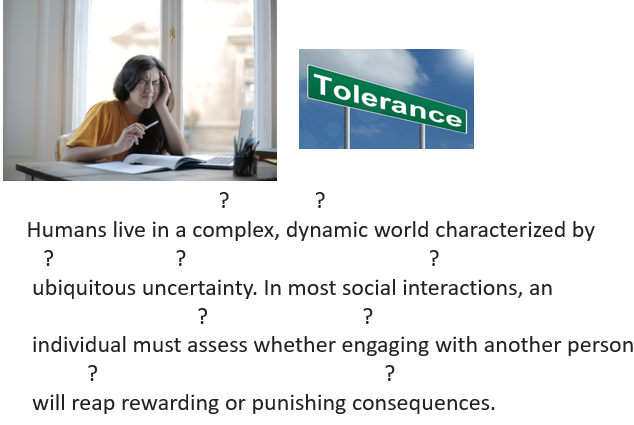
Thinking back on the Saki that I remember at the beginning of the class, I’m pretty sure I know what changed for her. I noticed that on her copy of the first article, she had tons of translations, even above words that there was no doubt she would know. She believed that the only way that she could feel confident that she was really understanding a passage was if she knew the meaning of absolutely every word. In other words, she lacked a tolerance for ambiguity.
She told me that she had lost her confidence after looking at the Pharmaceutical course book because there seemed to be so many words she didn’t recognize.
How Saki (and her classmates) gained her confidence by developing a tolerance for ambiguity in everything they read.
We want to maximize the opportunity for the students to feel confident. This begins just before they start reading a passage and continues as they get constant SELF-FEEDBACK in various forms as they read. In other words, they are not relying on the teacher to tell them if they are understanding.
Before students are assigned a reading for a mainstream class, they will have some schema for what the reading is about. We can do the same with a SIMPLE pre-reading exercise.
Students are naturally intrigued by how other students have reacted to a read. We can tap into this during a pre-reading exercise. (Notice: Students do all the exercise describe below individually and at their own pace. After they have completed all the exercises, the teacher checks them.)
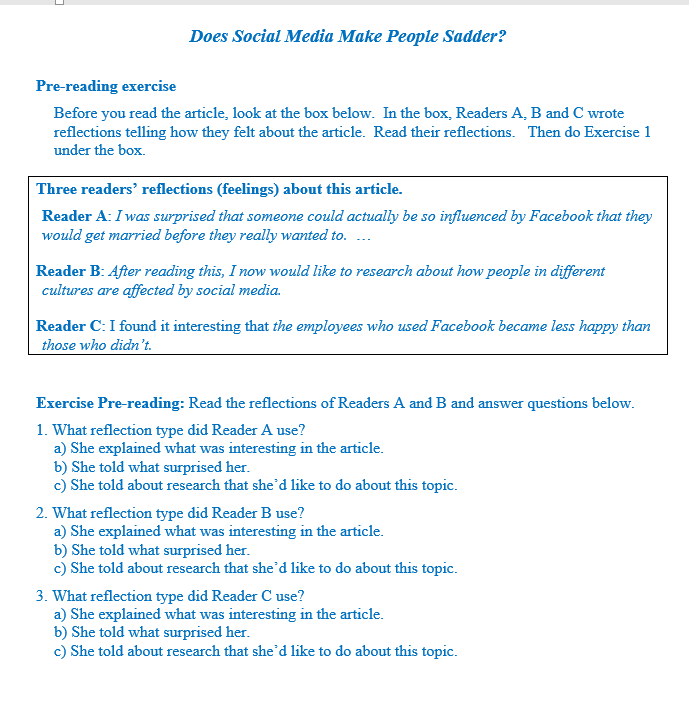
Next, we want them to see that they understand main ideas WITHOUT USING A DICTIONARY even if they don’t understand all the words.
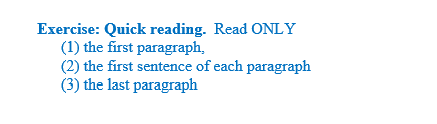
After students have completed the “Quick reading” of Exercise 2, they get feedback that will show them that they have, in fact, understood the main ideas. It’s rare for any student to make a mistake on these.
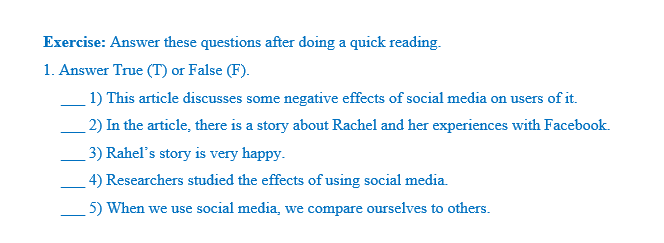
At this point, students’ confidence is rising, and they are ready for the next challenge of showing they UNDERSTAND MORE DETAIL FROM THE CONTEXT.
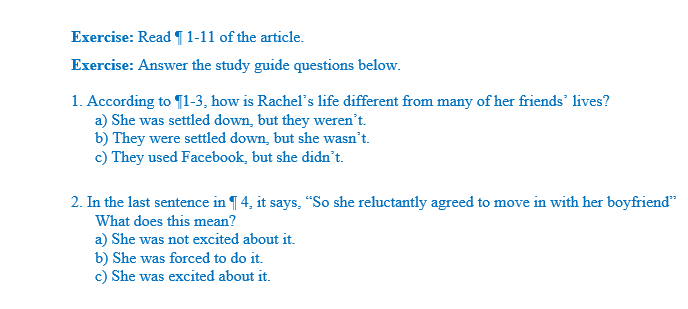
Notice: Often students with low-confidence would look up the word, “reluctantly.” However, because they can’t use a dictionary, they will figure out the word from the context and apply this skill in the future.
As mentioned above, we want to give students continuous opportunities to demonstrate to themselves that they are understanding the passage. The fill-in-the-blanks of a paraphrase does just that. We DO NOT just have them write a paraphrase because that would not supply feedback to them.
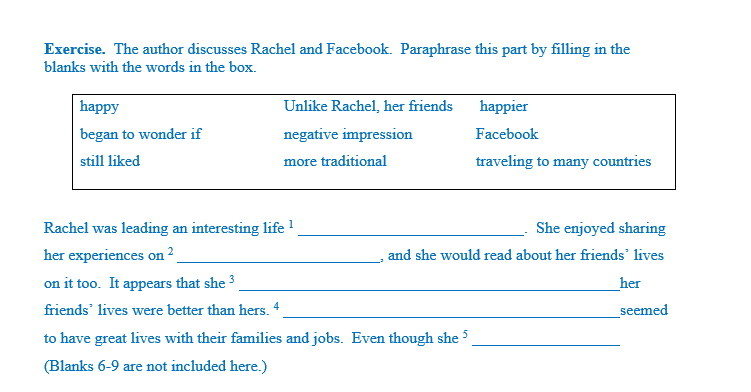
We can also include a low-stress challenge for them. Interestingly, although this question is optional, almost every student answers it, which could be a good indication of their improved confidence.

As mentioned above, when the students complete all the exercises, the teacher checks them. However, while they are working on the exercises, the teacher remains available to help if needed.
To see a complete unit using this approach, see • 1st Free ESL Reading Unit: Does Social Media Make People Sadder?
Also, for more about this approach, see • The Most Effective Classroom Organization for Reading Skills Development (Student-Centered)
David Kehe
Faculty Emeritus
*About the free-download materials. During my 40 years of teaching ESL, I have had many colleagues who were very generous with their time, advice and materials. These downloads are my way of paying it forward.
 Common Sense Teaching ESL