Category Archives: 06 ❖ ESL WRITING

These postings include writing activities, teaching techniques and strategies for evaluating writing skills.

• High Early Grades in a Course: Motivating or Dangerous

Low grades Cover shot

At the end of the term, the Level 3 Writing teacher Pam (not her real name), was filled with turmoil. She had shared samples of her students’ papers with our Writing Panel (a group of five Writing teachers.) After reading the papers, the members felt that four of her students’ writing skills hadn’t developed enough to pass to the next level. Thus, the members recommended that those four repeat Level 3.

Pam acknowledged that the students’ skills were weak and said that two of them were expecting to fail. However, the other two would feel shocked.

At the beginning of the term in September, Pam liked to give students high grades on assignments. She was worried that low grades would discourage them. As the term progressed, she continued to score high those students who made a good effort, thinking that would keep them motivated. But now it was December, and she was caught in a dilemma: either pass those two students who would struggle greatly in the next level or shock and disillusion them with the news that they had failed.

In his book, Punished by Rewards, Alfie Kohn, discusses meaningful perspectives about and approaches to giving grades. By incorporating many of her ideas, we can avoid the pitfall that this Writing teacher had fallen into.

Continue reading

• Introducing any ESL Lesson: FIVE Effective Ways

COVER Intros

I need to start by making a confession. After I had been teaching ESL for about 10 years, I suddenly realized that I had become a bit careless about something important.

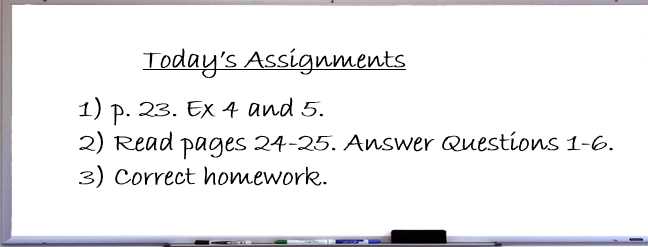
Here is what happened. As I mentioned, I was in my 10th year of teaching ESL, and I was asked to teach a course to American university students who wanted to become ESL teachers. One day, I planned to demonstrate a lesson. The first thing I decided that I need to tell them is that it’s really important to have a good introduction to the lesson. You don’t just want to tell students, open your books to page 23. Your assignment is to do Ex 4 and 5.

Slide 1

But wait! That is exactly how I had been starting my ESL classes recently. I realized that in my effort to get the lesson started, I had stopped doing a very important first step. And as a result, I missed an opportunity to stimulate and motivate my student.

So as I prepared to show my teacher-training students ways that they could introduce lessons, I returned to my days as a beginning teacher and started to use them once again with my ESL students. And I have to tell you, the results were amazing. I could see it in my students’ faces how much more energized and eager they were to do the activities. And I felt not only excited about teaching them but also confident in the importance of the activities they were about to do.

Perhaps the greatest motivator for students is feeling like they are working toward something worthwhile and are doing something important. We can satisfy this need in students by explaining the reason for the assignment.

So here are four great techniques that you can use to introduce your lessons.

Continue reading

• Getting Backed Up with ESL Paperwork: Effective Solution

Cover shot

There seems to be certain times during a term when we can feel a bit overwhelmed by the amount of paperwork coming in. During those times, it makes sense to establish some priorities concerning how we approach “marking” the various assignments.

It’s sometimes tempting to rationalize not giving any feedback on or returning some homework assignments by thinking that there are intrinsic benefits for students to just do the exercises. We say to ourselves that it’s not absolutely vital that they get them back quickly (or even, in some cases, ever). Thus, we might consider doing a “triage” with assignments. Essays might get top priority for our time and attention with “lesser” assignments just filed away or held off until sometime in the future when we are all caught up.

Surprisingly, this feeling of being overwhelmed can actually open up a motivation to respond to homework assignments in a way that is more effective than how we would “normally” do it when we have plenty of time.

Continue reading

• LINCS Topic 5: What are your recommendations for teaching writing to higher-level learners who have academic goals?

Cover 5 higher levels REV

 (This posting includes a handout which you are welcome to use with your students.) 

This posting is a more detailed response to my interview question on Day 5 .LINCS Discussion: Student-Centered Approach to Teaching Writing Skills. .

Below in blue, you’ll find the details that I’ve added to the Day 5 LINCS’ posting.

My top recommendation is to develop a clear understanding of the type of writing students will do in English Comp and academic class after they leave our classes.

With this as our starting point, we can apply our knowledge of language learning to help them develop the skills they will need.

In a survey of 360 college faculty members (of mainstream courses), it was found that, when asked to prioritize the most important components of an effective piece of writing produced by their ESOL students, the respondents chose, as their top three priorities (1) organizing content to express major and supporting ideas, (2) using relevant examples, and (3) demonstrating command of standard written English (Hinkel, 2004). 

I have found similar results from my face-to-face interviews of more than 40 mainstream college instructors in 8 different subject areas who assign papers in their first-year courses. Ten of these were English Comp instructors.

Here are some recommendations based on research.

Continue reading