Category Archives: • Lower & Intermediate Levels

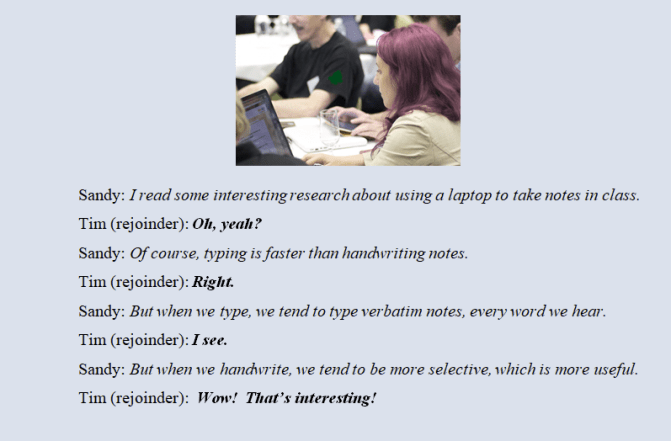
• Conversation magic: Two most important conversation techniques (Part 1)

Cover Rejoinders SHOT

(This posting includes a handout which you are welcome to use with your students.)*

YouTube This posting is discussed on my YouTube video The Two Most Important Conversation Techniques to Teach ESL Students (Part 1)

Making conversation magic happen

After a colleague used these exercises with her students, she told me with wonder in her eyes, “I saw magic happen in my class today.  My students suddenly became very animated, their voiced rose, and they were laughing!” 

Then she wondered if it was some kind of set up.  In other words, by using these techniques, students have no choice but to feel like someone is interested in what they are saying.

In a sense, she is right.  But isn’t that what we hope our students will experience? These are the two techniques:

1) Use rejoinders to show that they understand what the other has said by giving understanding responses.

2) Ask follow-up questions to maintain the conversation and to show interest in each other..

When someone uses these in a conversation, their interlocutor can’t help but feel like someone thinks they are interesting to talk to.

Use rejoinders and make your interlocutor feel good.

Continue reading

• Conversation magic: Two most important techniques. (Part 2)

Follow up Cover shot

This posting includes a handout which you are welcome to use with your students.) *

YouTube This posting is discussed on my YouTube video The Two Most Important Conversation Techniques to Teach ESL Students (Part 2)
The conversation magic: Making others feel like they are interesting people by asking follow-up questions.

Combined with rejoinders (explained in Part 1), this technique is almost guaranteed to engage students in animated and enjoyable conversations.

The second activity involves maintaining and extending the conversation by questions about what their partner has said.  It’s called “Using Follow-Up Questions.”  See Part 1 about Rejoinders  Conversation magic: Two most important conversation techniques (Part 1)

Continue reading

• Conversation class: Necessary ingredients for successful pair work (from research)

Cover Conversation ingredient


(This posting includes a handout which you are welcome to use with your students.)*

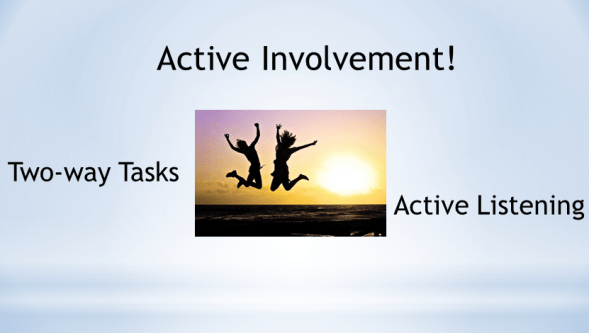
An important ingredient for making pair work activities successful learning experiences would seem to be active involvement on the part of both members; and it seems obvious that certain tasks would produce more involvement than others.  In fact, research has been conducted on the type of communication present when pairs are involved in one-way and two-way tasks.

Continue reading

• Introduction to Teaching ESL Conversation: Effective Pair/Group Activities

Cover intro esl conv shot

How to teach ESL conversation

(This posting includes a handout which you are welcome to use with your students.)*

One of the most rewarding aspects of teaching a conversation class is that when you teach your ESL students conversation techniques, you get to hear them talk about their culture, their experiences, opinions and dreams.

A student-centered approach doesn’t mean the teacher just puts students in groups, gives them a topic and tells them to talk about it.  It doesn’t even mean that the students are put in pairs (Student A/Student B), given two different “information gap” papers and told to complete the exercise by talking.

A student-centered approach to conversation-skill development is much more than that.

Continue reading