Category Archives: 10 ❖ APPLIED PSYCHOLOGY IN TEACHING ESL

• ESL Students Can Increase Positive Emotions in Readers/Teachers with This Writing Technique

smiling teacher

(This posting includes a handout which you are welcome to use with your students.)

After reading Curry’s essays, I often came away feeling especially good. This kind of surprised me because she wasn’t among the top writers in my class. Her grammar tended to breakdown at times, and her sentence style could be a bit simple. And yet, there was something special about her papers.

Continue reading

• Small Steps for Students Who Are Feeling Discouraged

Cover discouraged shot

A boy wanted to ask a girl to the school dance, but he was too shy to talk to girls. To help him start to overcome his shyness, one day in a store together, his mom told him to walk up to a female clerk and ask where he could find the toothpaste. If he did that, he’d prove to himself that he could interact successfully with a female who was a total stranger, and he’d be able to see himself moving toward his goal. (From Switch: How to Change Things When Change Is Hard by Chip and Dan Heath.)

I realized that I could apply the principle behind this story to a category of students who seem to be in many of the ESL classes that I’ve taught. They are the ones who are feeling discouraged about their seemingly inability to progress in their language-skill development. Many of them have failed the course, and in some cases, more than once.

Some of these learners don’t feel like trying any more.

Continue reading

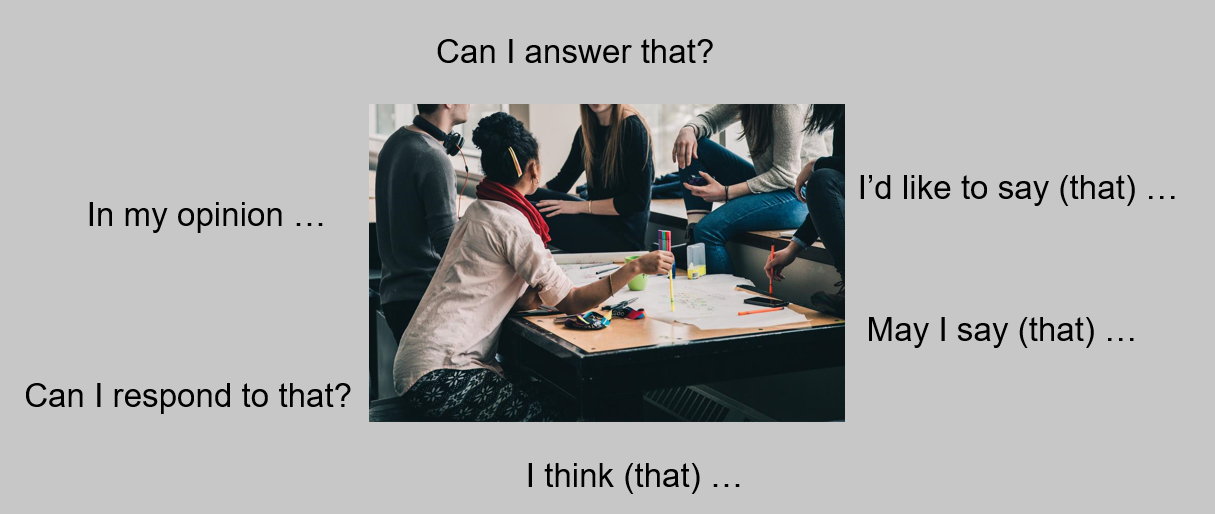
• Helping Students Overcome Hesitancy to Volunteer an Answer in Group Discussions

Cover Vol shot

(This posting includes a handout which you are welcome to use with your students.)*

One day, I ran into an exasperated-looking colleague in the copy room at our school. She had just come from her ESL class in which she wanted to check some homework whole class. To do this, she asked, “What is the answer to Question 1?” Then she waited for someone to volunteer to answer, but nobody would.

Many of us ESL teachers have been in similar situations, especially with East Asian students. In his book, Behave, neuroendocrinology Robert Sapolsky gives a possible explanation for this by describing “… the archetypical experience of American Peace Corps teachers in [East Asian] countries—pose your students a math question, and no one will volunteer the correct answer because they don’t want to stand out and shame their classmates.”

[For more about the reasons for the differences among students from different cultures, see Best Subject for an ESL Integrated-Skills Class (Part 1 Overview)]

Needless to say, it’s not just East Asian students who are reluctant to volunteer answers. Students from other parts of the world who are basically shy or lack confidence in their speaking skills may also be hesitant.

Most of us would agree that a willingness to volunteer an answer during group discussions carries some great benefits in helping students take advantage of speaking opportunities. Once they become comfortable with this skill, there is often a carry-over effect in which they tend to be more will to volunteer in whole class situations. Also, perhaps more importantly, I’ve noticed an increase in students’ willingness to initiate a conversation with me before or after class and to ask for help on assignments and not just wait for me to offer.

How to help students feel comfortable volunteering an answer

Continue reading

• The Importance of a Classes’ Final Minutes—The Last Impressions.

Cover medium

You’ll probably wonder what an experiment involving a bucket of ice has to do with teaching ESL but bear with me. ice bucket shot

In The Power of Moments by Heath & Heath, the authors discuss an interesting psychological experiment in which participants were subjected to two different versions of an unpleasant experience.

The first trial had subjects submerge a hand in 57-degree (14°C) water for 60 seconds.

The second trial had participants submerge the other hand in 57-degree water for 60 seconds yet they then kept their hand underwater for an additional 30 seconds, during which time the temperature was raised to 59 degrees (15°C).

Next, participants were asked “Would you rather repeat the first trial or the second?” Amazingly, two-thirds of the participants chose to re-do the second trial, even though they were exposed to uncomfortably cold temperatures for a longer time. Researchers concluded that participants chose the second, longer trial because they preferred the memory of that second trial or disliked it less. In other words, people judge an experience by how the event ends. Psychologists refer to this as the “peak-end rule.”

This can also explain why 2-week vacations are not necessarily remembered more fondly as 1-week ones. What seems to matter is how they end.

Similarly, negative endings can leave us with a bad impression about what had been a pleasurable experience up until then. A common example is a breakup of a relationship as we clearly recall the painful final interaction.

How this applies to teaching ESL.

Continue reading