Category Archives: 09 ❖ MOTIVATING ESL STUDENTS AND TEACHERS

These posting include techniques for motivating ESL students and perspectives for motivating teachers.

• Most Important Tool for Managing Classroom Behavior (Case two and Caveat) REVISITED

Classroom management

“David, Please report to the Director’s office as soon as your class finishes.  He needs to talk to you.”  A program assistant handed me a note with those sentences on it.  Gulp!

In the early 1980s, my wife and I, without much thought, accepted teaching positions on the Greek island of Lesbos.  It was a Greek island, so what could possible go wrong?

It was a prep school that high school students attended in the late afternoons/evenings after high school to study English.  Shortly after arriving, we met one of the teachers whom we were replacing.  He told us that the school had a lot of discipline problems because many of the students didn’t want to be there.  He said that the teacher-turnover was quite high as a result.  In fact, a couple of teacher had just disappeared a few months earlier.

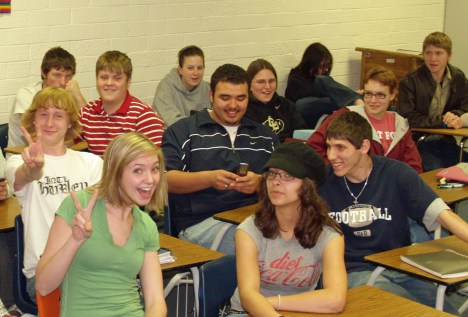
On the first day of class, as we walked down the hallway, we could see students literally chasing each other around the class rooms and jumping on the desks.  My first class was with 16 tenth-grade students.  Although most of the students paid little attention to me but instead continued to chat as I started the lesson, there were three female students sitting in the front row appearing eager to begin.  Those three became the focus of my attention.  Gradually, most of the others started to engage in the lesson, while a couple slept or doodled or looked out the window.

Continue reading →

• The Writing Workshop: Countless Benefits for ESL Students and Teachers (REVISITED)

Cover workshop revisited Shot

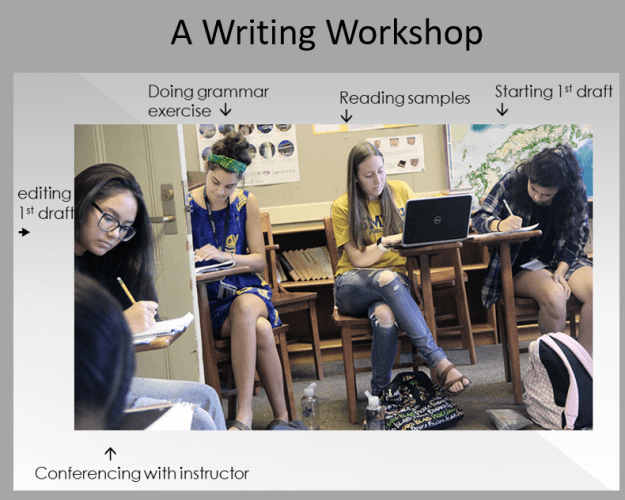
This posting includes sample lessons of a Writing Workshop that give students a lot of autonomy.*

This posting is an update of my February 1, 2019 post:  Most Important Motivator of Students: How You Can Do It

Since posting this back in 2019, I’ve heard from teachers who decided to try out a Writing Workshop with their ESL Writing classes even though they were skeptical at first. Their hesitation seemed to be doubtful that their students would actually be productive without more direct teacher control. However, they reported that their initial skepticism was quickly dispelled after seeing the same great benefits that I had described in the post below. Almost all of them stated that they couldn’t imagine teaching a Writing class in any other way in the future.

Here is that posting.

Continue reading →

• A Surprisingly Simple Quality that Students Want in Their Teachers

Screenshot (1406)

It was early in my teaching career, and I had recently started teaching for the first time in Asia. My students were a total pleasure to work with. But I wondered what they were looking for in me, their teacher. The director of our program seemed like a thoughtful Asian man, so I believed that he could give me some insights. I wasn’t disappointed.

What he told me seemed so simple, but the more I thought about it throughout my teaching career, the more impactful it became. Also, when I reflected back on the characteristics of my favorite teachers in the past, his insight was spot on.

Here is what he told me when I asked him, “What are students looking for in their teacher?”

Here is what he told me in one simple sentence when I asked him, “What are students looking for in their teacher?”

Continue reading →

• Making a Connection With Each Student: Research-Based Technique

Cover Rev Similar shot

(This posting includes a handout link at the end of this post which you are welcome to use with your students.) *

Early in one term, I was starting a conferencing session with a new student, Anja. As she was sitting down next to me, she said, “David, I heard that you grew up in Chicago. I just had a homestay there!” I noticed that I immediately felt a connection to Anja that stayed with me from that day on.

There is some amazing research that explains how we make connections with others. And best of all, there are ways that we can apply this to building positive relationships with our students.

In their book Click: The Power of Instant Connections the authors, Ori and Rom Brafman, describe some enlightening experiments. In one study, some people volunteered for a made-up study about creativity. The researchers secretly set it up so that as half the volunteers left the researchers’ lab, someone wearing a badge with the same first name as the volunteers approached them asking for a donation to a charity. For example, if Cindy had just left the lab, she would be approached by a charity worker wearing a name tag that showed that her name, also, was Cindy.  Likewise, Susan would meet someone named Susan. The other half of the subjects were approached by someone with no badge. Now this is what I found remarkable. The first group whose same first names were on badges donated twice as much as the second group who saw a badge with a different name.

Continue reading →