Tag Archives: activities

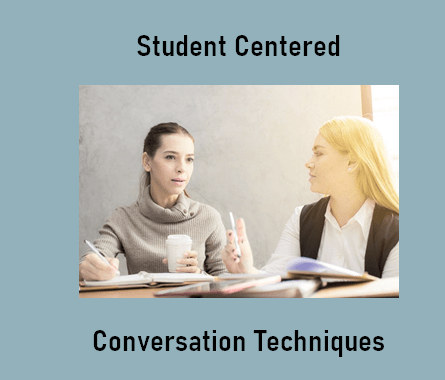
• Introduction to Teaching ESL Conversation: Effective Pair/Group Activities

Cover intro esl conv shot

How to teach ESL conversation

(This posting includes a handout which you are welcome to use with your students.)*

One of the most rewarding aspects of teaching a conversation class is that when you teach your ESL students conversation techniques, you get to hear them talk about their culture, their experiences, opinions and dreams.

A student-centered approach doesn’t mean the teacher just puts students in groups, gives them a topic and tells them to talk about it.  It doesn’t even mean that the students are put in pairs (Student A/Student B), given two different “information gap” papers and told to complete the exercise by talking.


A student-centered approach to conversation-skill development is much more than that.

Continue reading

• Fluency Writing: Reading, Speaking In Triads, And Listening Culminating In A Writing Task

Cover fluency shot

                                          Integrating the four skills

(This posting includes a handout which you are welcome to use with your students.)*

This is the perfect activity for integrating four skills into one activity.  And it culminates in a writing task in which students focus on controlling their grammar and on their sentence style.  It’s also one in which students can practice those two aspects of writing without having to spend time thinking about what to write.

These fluency activities can be used throughout a term when instructors would like to have students work on their grammar in a writing context and/or when they would like to add some group work in their writing classes.  Also, it’s a good lead-in to teaching paraphrasing skills.

Continue reading

• Purposeful Reading: Read faster and create a tolerance for ambiguity

Slow reading because of translating

Slow reading because of translating

(This posting includes a handout which you are welcome to use with your students.)

The other day, Mari, an ESL student of mine, asked me if I could help her with an article that she had been assigned for one of her courses.  I could see that the article would be quite challenging for her.  And I couldn’t help but notice that she had covered the article with translations.  It was obvious that she had little confidence that she’d be able to understand any of it unless she translated almost every word, even words she actually knew.

As mentioned in a previous posting • Purposeful reading: Students read faster if they know what they are looking for. , if student know the purpose of a reading assignment, they tend to read faster because they don’t get bogged down in trying to understand unnecessary details and vocabulary.  Also, they are more likely to become tolerant of ambiguity. Included in this posting is a unit (an article and study guide) that begins with a focus on the reason students would read the article.

Continue reading